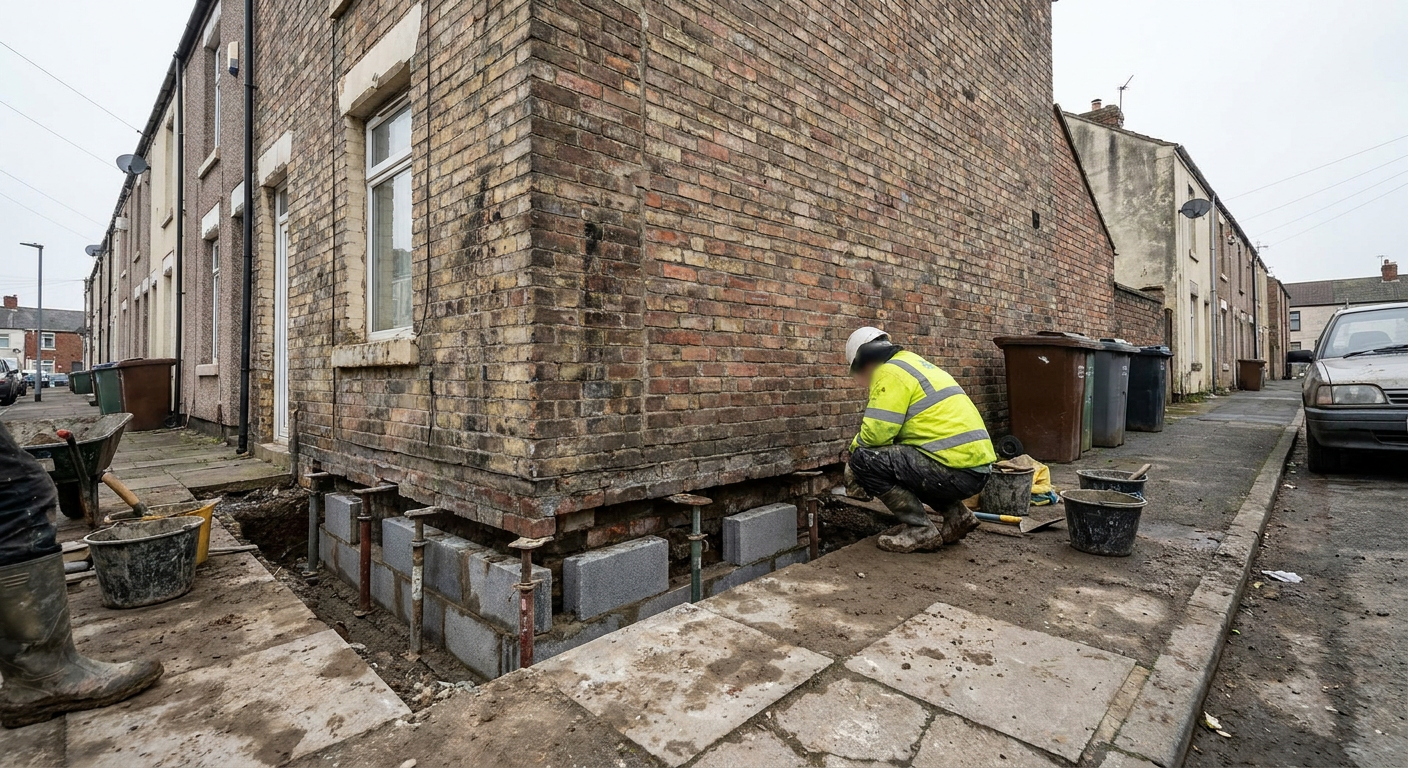
Cardiff terraces
Underpinning a terraced house in Cardiff: neighbours
Tell us about the crack or movement you have noticed in your home. There is no charge for an initial enquiry, and it does not commit you to any work.
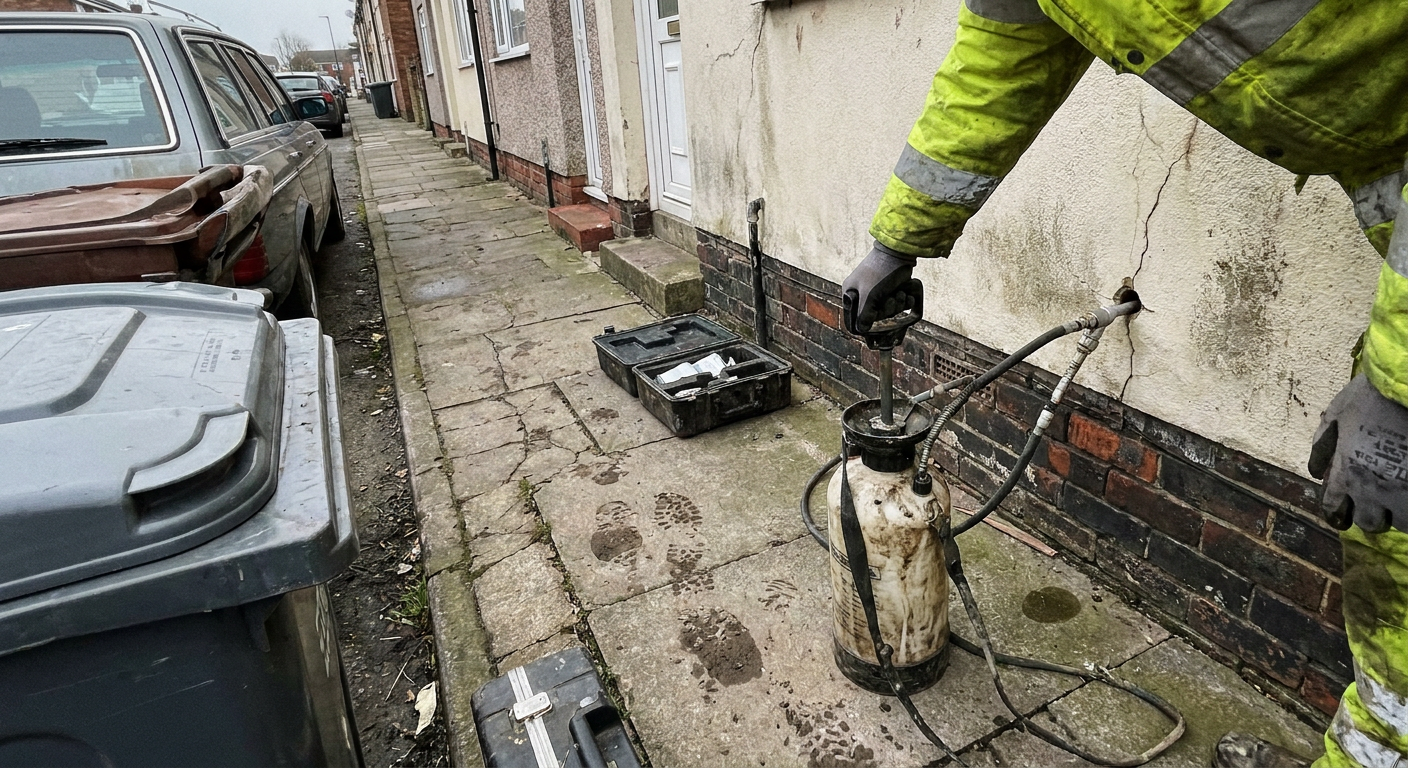
Why shared walls change the job
A terraced house in Cardiff stands shoulder to shoulder with its neighbours. The party wall runs from the roof down to the foundations, so any subsidence affecting one side often involves the other. When the ground beneath a terrace shifts, the specialist firm carrying out the repair has to consider both homes before digging begins.
The footings under a Victorian terrace were poured as a continuous strip. If one section sinks because of clay shrinkage or a leaking drain, the stress travels along that shared line. A [subsidence survey](/methods/subsidence-survey-cardiff) will map where the movement starts and stops, which determines whether the work touches the boundary between the two properties.
Because the wall belongs to both households, neither owner can alter its support without the other knowing. This is why the legal framework around party walls exists: to protect the person living next door while allowing the necessary [foundation repair](/methods/foundation-repair-cardiff) to go ahead.
Serving notice under the Party Wall Act
Before any excavation or underpinning begins near a shared structure, the homeowner must serve a formal notice on the adjoining owner. The Party Wall etc. Act 1996 sets out the rules. For work that involves underpinning a party wall, the notice period is two months.
The notice explains what the specialist contractor intends to do, when they plan to start, and how the work affects the shared wall. The neighbour then has fourteen days to respond. They can consent, dissent, or ignore the letter entirely. Silence after fourteen days counts as a dispute, which triggers the appointment of surveyors.
Serving notice early avoids delays later. If the adjoining owner agrees in writing, the work can proceed once the notice period ends. Many terrace owners in Cardiff find their neighbours cooperative, especially if the subsidence is visible on both sides of the wall. But the paperwork must be correct regardless of how friendly the relationship is.
What happens if the neighbour dissents
A dissent does not block the work. It means the two households must appoint surveyors to agree on a party wall award. Each owner can choose their own surveyor, or both can agree on a single one. The cost of these surveyors usually falls to the homeowner carrying out the underpinning.
The award is a legal document. It records the condition of the adjoining property before work starts, sets out exactly how the [underpinning contractors](/methods/underpinning-contractors-cardiff) will carry out the job, and specifies working hours. It also states who pays if damage occurs during the process.
For a terraced house, the award might require the specialist firm to install temporary supports on the neighbour's side before excavating beneath the shared footing. It may also mandate [structural monitoring](/methods/structural-monitoring-cardiff) on both properties throughout the project, so any unexpected movement is caught immediately rather than discovered weeks later.
Choosing a method that limits disruption next door
The type of underpinning matters enormously in a tight terrace. Traditional [mass concrete underpinning](/methods/mass-concrete-underpinning-cardiff) involves digging pits in sequence beneath the existing foundation and filling them with concrete. In a terraced street, this means heavy excavation right against the neighbour's footing. The specialist firm will need to shore up the party wall carefully during each stage.
Where access is restricted or the soil is poor, [mini piled underpinning](/methods/mini-piled-underpinning-cardiff) transfers the load deeper into stable ground using small diameter piles driven through the existing foundation. This can reduce the amount of open trenching near the boundary.
In some cases, [resin injection](/methods/resin-injection-cardiff) stabilises the ground without large-scale digging at all. The resin expands beneath the footing to fill voids and compact loose soil. Because it requires only small drill holes, the disruption to the adjoining property is minimal. The right choice depends entirely on what the ground investigation reveals.
Protecting the neighbour's home during the work
Once the award is settled and the method chosen, the specialist firm prepares the site. In a terrace, preparation includes protecting the adjoining property from vibration, dust, and accidental damage. Scaffolding often needs to straddle the boundary, which requires the neighbour's permission or a clause in the party wall award.
Excavation near a shared wall is done in short bays. The contractor never digs out the entire length of the foundation at once. They work in alternating sections so the wall above always has support. This sequence is standard practice for [house underpinning](/methods/house-underpinning-cardiff) in terraced streets across Cardiff.
If cracks appear in the neighbour's plasterwork during the job, the party wall award dictates how they are addressed. Keeping communication open helps. Most disputes arise from surprise rather than actual structural harm. When the adjoining owner understands the schedule and the safeguards in place, the project proceeds with fewer interruptions.
Ask about underpinning your terraced home
Send the details of what you have noticed. Your enquiry goes to a local service that handles the initial questions, and there is no obligation to proceed with any work.
- No fee to enquire
- No obligation to proceed
- Local to Cardiff