Cardiff homes
Clay soil cracks in walls and what they mean
Find out what the crack means and whether the ground beneath your home is moving. Send an enquiry about your house and a specialist firm will respond without charging you for the advice.
Why clay moves and what it does to your walls
Finding out if your street sits on clay
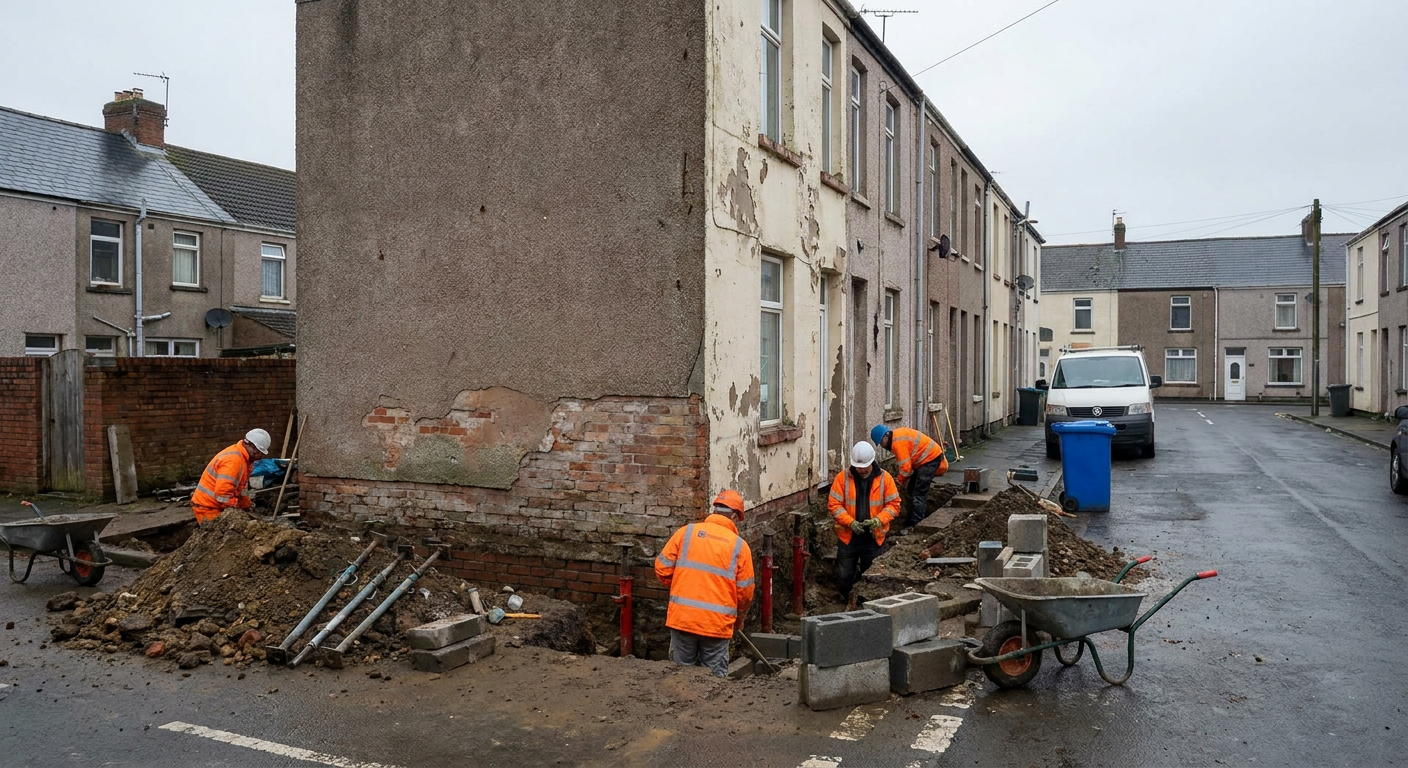
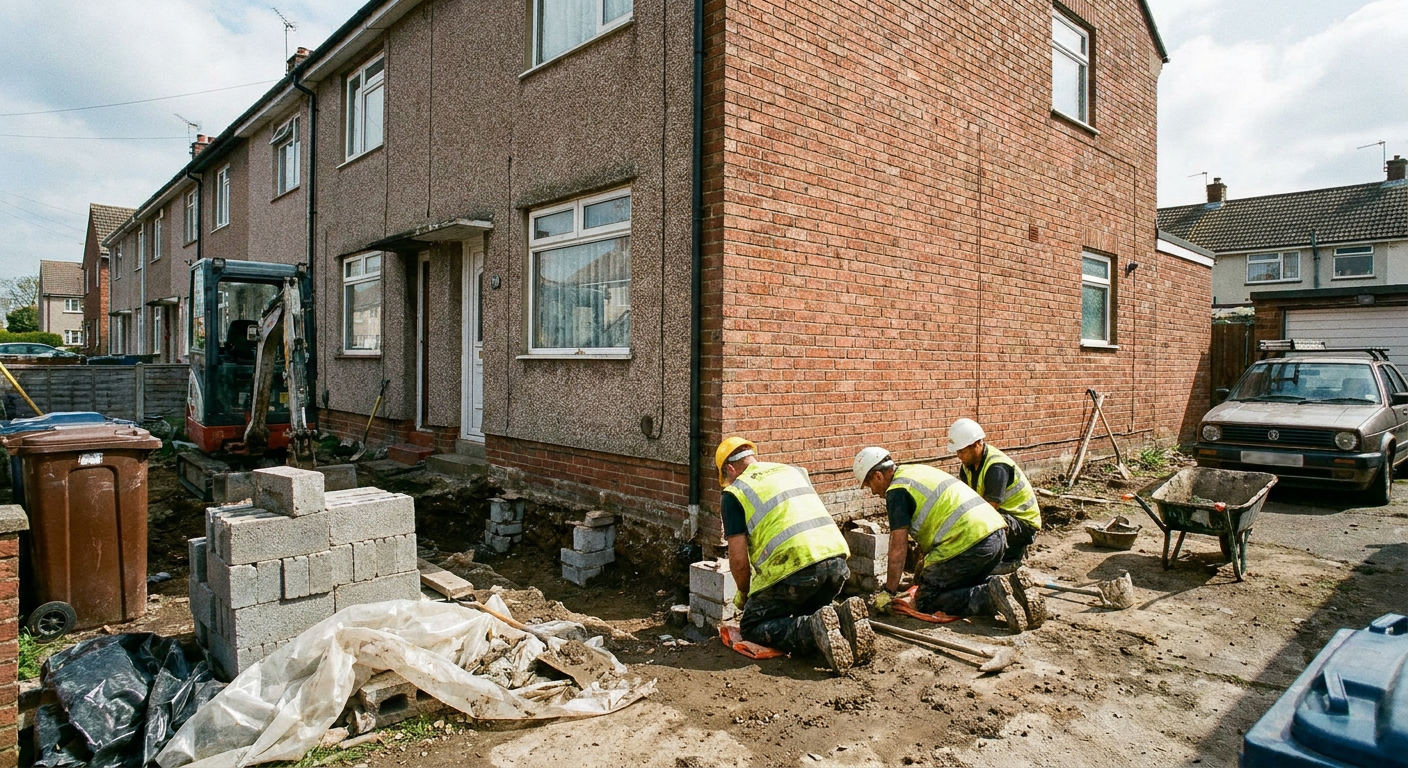
Much of Cardiff rests on shrinkable clay, though the depth and type change from one street to the next. If you are wondering whether the ground under your home is clay, a subsidence survey establishes exactly what lies beneath the footings. The specialist firm digs trial holes or takes bore samples to see the soil profile.
You can also look at nearby gardens after heavy rain. Clay holds water near the surface, so puddles that linger suggest poor drainage through dense ground. Older maps sometimes show where brick pits dug into local clay, which hints at the geology. But guessing is not enough when a wall has opened up. A proper investigation tells you whether shrinkable clay subsidence is affecting your home, or whether something else is going on. Reading about Mercia mudstone or limestone in north Cardiff gives context, but the ground under your specific house needs its own assessment.
Why cracks open in summer and close in winter
Clay shrinks when it dries out and swells when it gets wet again. During a long dry spell the ground loses moisture, so shallow footings settle as the soil contracts beneath them. That movement pulls the masonry apart, usually starting near windows or doors where the wall is weakest. When autumn rain returns the clay takes the water back and pushes the foundations upward again.
This cycle produces seasonal cracks in plaster and brickwork. You might notice a gap in your lounge wall widen in July and narrow by January. That pattern points strongly to clay shrinkage rather than a permanent drop in the footings. A structural engineer tracks this movement over several months to confirm the cause. Crack monitoring uses small gauges fixed across the gap to measure how far it opens and closes. Without those readings it is hard to separate normal seasonal movement from damage that needs foundation repair.
Shrinkage versus a footing that has dropped
A hairline crack that follows the mortar joints and closes again with the seasons is usually shrinkage. A wider crack that runs diagonally through bricks, stays open all year and grows longer suggests the footing has dropped permanently. Telling the two apart matters because the fix is completely different.
Shrinkage cracks often need only repointing or a flexible filler once the ground stabilises. Permanent settlement might require mass concrete underpinning or mini piled underpinning to transfer the load past the weak clay to firmer strata below. A specialist firm examines the pattern, measures the width and checks whether doors still hang square before recommending anything. Jumping straight to underpinning contractors without that diagnosis risks paying for work the house does not need. The right survey separates minor movement from structural failure, so the repair matches the actual problem rather than the worst fear.
Trees pulling moisture from the ground
A large tree close to your home can draw thousands of litres of water from the clay each summer. Its roots spread much further than the canopy, so even a neighbour's tree might be reaching beneath your walls. When the roots extract moisture faster than rain replaces it, the soil shrinks unevenly and the wall cracks.
Tree roots cracking a house wall is a common cause of subsidence claims in Cardiff suburbs with mature gardens. An arboricultural report identifies which species are responsible and how far their roots extend. Sometimes pruning or removing the tree stops the movement. Sometimes the roots belong to a protected tree and cannot be touched, leaving resin injection or deeper foundations as the only options. A surveyor assesses the distance between trunk and footing before anyone touches the tree, since the wrong decision can make things worse.
Watching the cracks before calling anyone
It is sensible to observe a new crack for a few weeks before arranging a full investigation. Stick a thin piece of tape or a dated paper tell-tale across the gap and check it every fortnight. If the tape tears, the wall is still moving. Note the date and take a photograph each time.
Recording the width with a ruler helps too. Write down whether the crack looks wider after hot weather or after heavy rain. This diary gives a specialist firm useful evidence when they eventually visit. Monitoring guidance explains how to fix gauges properly so the readings hold up. Watching does not mean ignoring the problem indefinitely. If the crack widens beyond a few millimetres, reaches the ceiling or appears on both sides of a wall, waiting longer risks further damage. At that point an enquiry brings someone who reads the signs professionally.
Whether clay shrinkage always needs underpinning
Many homeowners assume any movement means the house must be underpinned. In practice, most clay shrinkage problems resolve once the moisture balance is restored. Managing the trees, fixing leaking drains or simply waiting for a wetter season can halt the movement without touching the foundations.
Underpinning becomes necessary only when the footings are too shallow for the ground conditions, when the clay layer is exceptionally deep or when previous repairs have failed. Mass concrete underpinning extends the existing footing downward. Mini piled underpinning bypasses the clay entirely, driving piles to a stable layer. Both are major jobs that disrupt the home, so a specialist firm recommends them only when simpler remedies will not work. Understanding what drives underpinning cost helps explain why firms try less invasive methods first. The goal is a stable house, not unnecessary excavation.
Removing a tree and the risk of heave
Cutting down a tree that has been drying out the clay sounds like an obvious fix, but it carries its own danger. Once the roots stop extracting water, the clay reabsorbs moisture and swells. This upward pressure, known as heave after tree removal, can push foundations higher than their original level and crack walls in new places.
The swelling can continue for years, especially under older houses with shallow footings. A specialist firm calculates the likely volume change before recommending felling. Sometimes partial pruning reduces water uptake enough to stabilise the ground without triggering heave. In other cases the tree must go, but the foundations need strengthening first to resist the upward force. Removing vegetation without understanding the soil mechanics trades one problem for another. Professional advice weighs the tree's current effect against the ground's capacity to swell safely.
What the cracks in your walls might mean
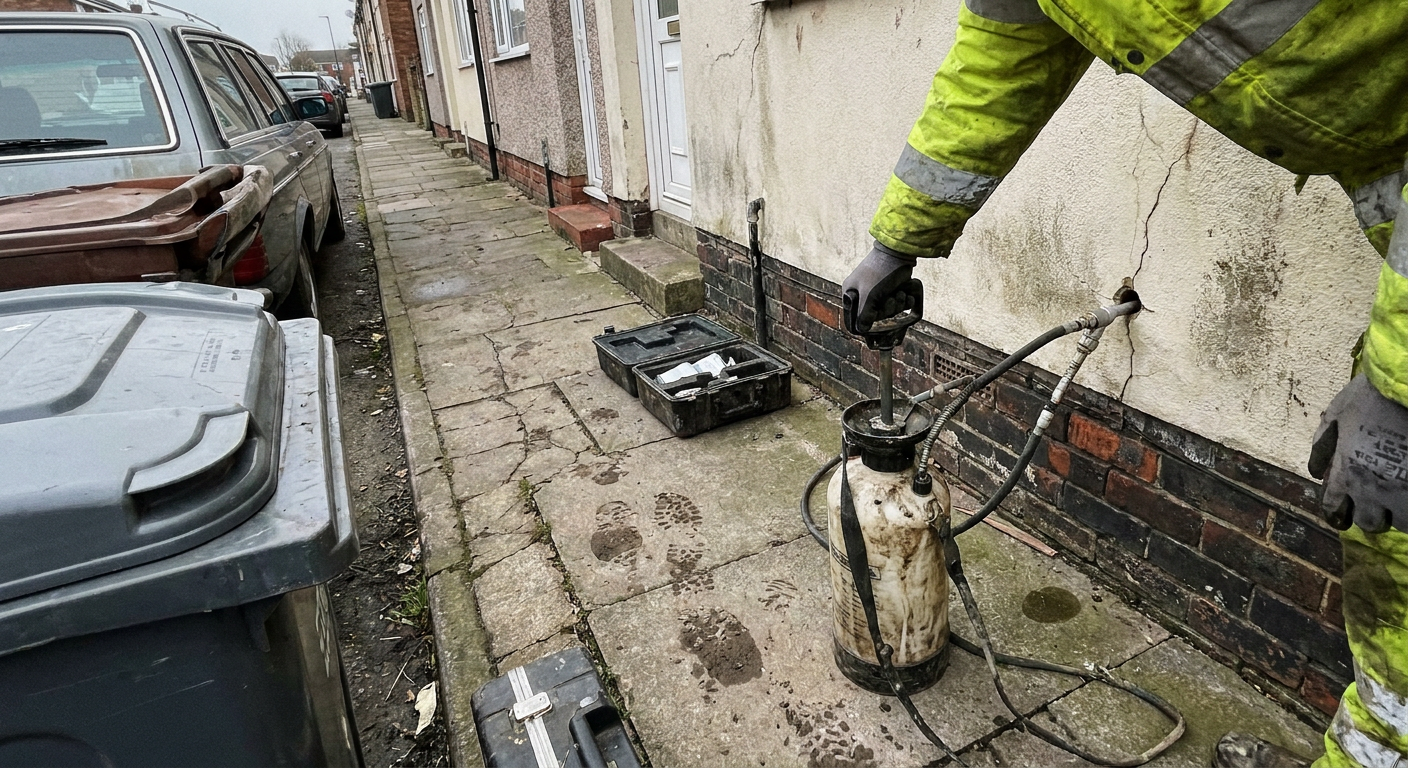
The same crack can point to different causes depending on its shape, timing and position. These patterns help you decide what to ask a specialist firm about next.
- Crack wider in summer, narrower in winter
- Seasonal clay shrinkage is the usual cause. A specialist monitors the crack over a full year to confirm the pattern and rule out permanent foundation settlement.
- Diagonal crack running from a window corner
- Differential movement, often where clay dries unevenly. A survey determines if the footing has dropped or just shifted.
- Hairline cracks in plaster only, bricks intact
- Surface drying or minor thermal movement usually causes this. The cracks are often cosmetic, but recording their width over several months confirms whether they stay stable or begin to widen.
- Gap appearing between skirting board and floor
- The wall may be rotating or the floor slab settling. A specialist inspects the footing depth and ground condition.
- Doors sticking in frames that used to fit
- The frame has distorted because the wall moved. Measuring the distortion shows how far the ground has shifted.
What changes the cost of repairing clay damage
Every house sits on different ground, so the repair method and the effort required vary from one job to the next.
| What it depends on | Why it matters |
|---|---|
| Depth of the clay layer | Deeper clay means longer piles or more excavation to reach stable ground beneath the shrinking zone. |
| Access around the house | Tight side returns or shared boundaries slow the work down and limit the machinery a firm can use. |
| Number of affected walls | Movement on three elevations requires more extensive support than a single cracked corner. |
| Tree root involvement | Roots beneath footings must be cut back carefully before any concrete is poured or resin injected. |
| Drainage repairs needed | A leaking drain softening the clay must be fixed first, adding pipe work to the overall job. |
The specialist firm sets out the full cost of your specific repair before any work begins.
Ask a specialist firm about your home
Send the details of what you have noticed. A specialist firm reviews the information and replies with advice on the next step. There is no charge for the initial response and no obligation to proceed.
- No fee for advice
- No obligation to proceed
- Local firms only