Cardiff homes
Cracks in walls advice for Cardiff homeowners
Send details of the crack you have noticed. There is no fee to ask, and no obligation to accept any work that follows. Find out what the movement means before it worries you further.
What to do when you notice a crack in your home
Where wall crack worry starts in Cardiff
A line appearing above a window frame or running down a hallway plasterboard is enough to start wall crack worry in any Cardiff home. The city sits on varied ground. Parts of Canton rest on river terrace deposits, while areas further north sit over limestone where swallow holes occasionally open up. Knowing who to ask about house cracks matters because the cause changes depending on the street you live on.
If you are looking for reliable cracks in walls advice, the first step is to record what you see before calling anyone. Take a photograph straight on, with something like a coin held next to the widest part of the gap so the scale is clear. Note the date. Check if the line stops at a door frame or carries through into the brickwork outside. That detail helps a specialist firm decide whether they are looking at plaster shrinkage or movement in the masonry itself.
Houses built on old dock land made ground behave differently from those on solid rock. Reading about the ground beneath your specific area gives you a better starting point than guessing.
Telling settlement from subsidence in older houses
Victorian terraces across Cardiff were built quickly, often by different builders using whatever bricks were cheap that week. Those houses settled decades ago. A fine crack following the mortar line in an older property might simply be that original settlement finishing its work, or seasonal expansion as clay dries out in summer and swells again after heavy rain.
Actual subsidence looks different. It tends to produce a diagonal crack that widens toward the top, often near a corner or under a bay window. Doors that used to close smoothly begin to stick. Wallpaper tears along a seam without any damp to explain it. If you suspect the difference between settlement and subsidence, a structural survey records the movement properly rather than relying on a visual guess.
Tree roots extracting moisture from clay soil is one common trigger. Another is a leaking drain washing fine particles away from beneath a footing. Both problems require different fixes, which is why identifying the cause comes before choosing a repair method.
Insurers, specialists and the right order to call
Many homeowners wonder whether to phone their buildings insurer first or seek independent cardiff subsidence advice before anything else. Insurers will eventually need to know if the problem turns out to be subsidence, but calling them immediately can open a claims file that affects future premiums even if the crack proves harmless.
Getting a clear picture of the damage first makes sense. A specialist firm can carry out a subsidence survey to determine if the foundations have actually moved. If the movement is minor, monitoring the crack over several months using fixed gauges shows whether it is still active or has stopped. Structural monitoring costs far less than excavating beneath a wall, and it provides hard data instead of assumptions.
Should the survey confirm the ground is failing, the insurer will need that report anyway. Having it ready speeds up the claim. The guides on insurance claims explain how the process works for homes in the Cardiff area.
How foundation problems are actually repaired
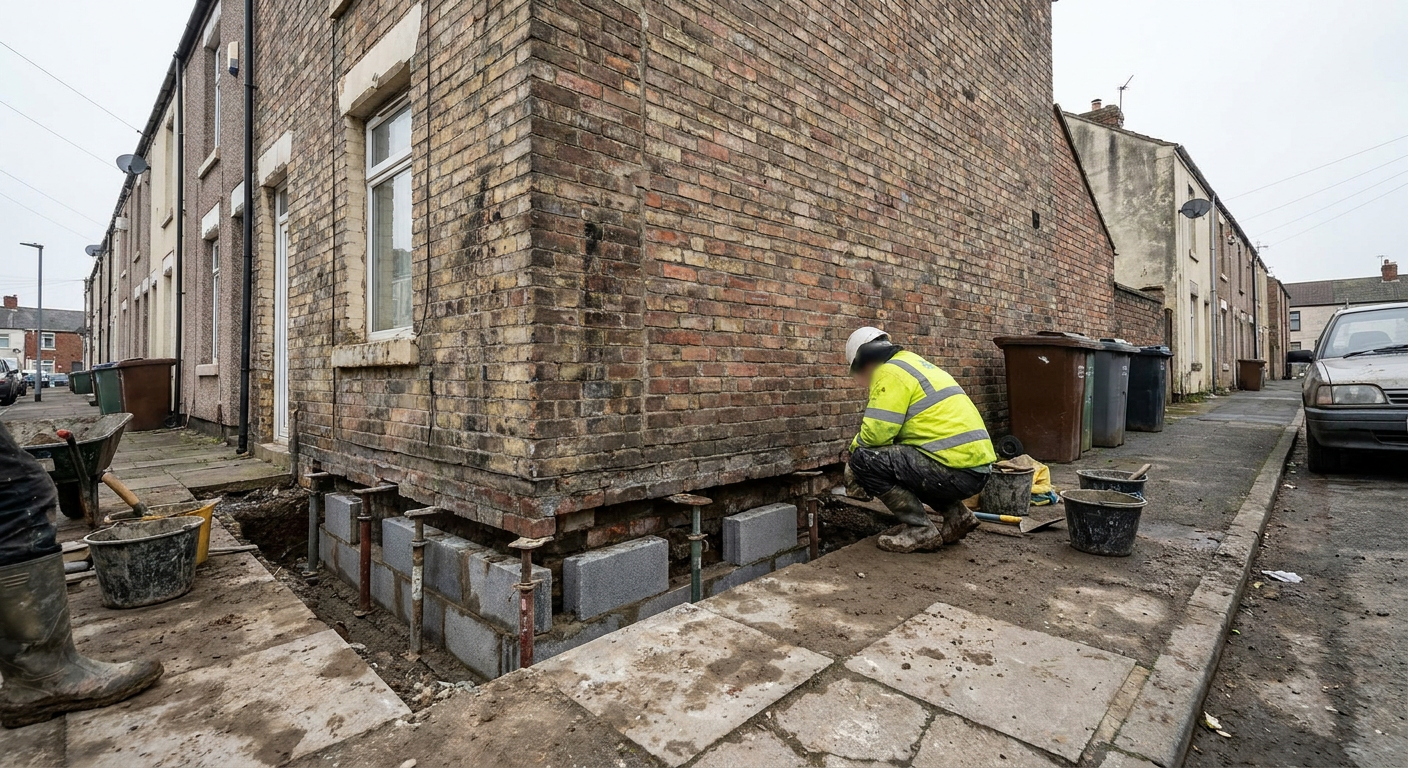
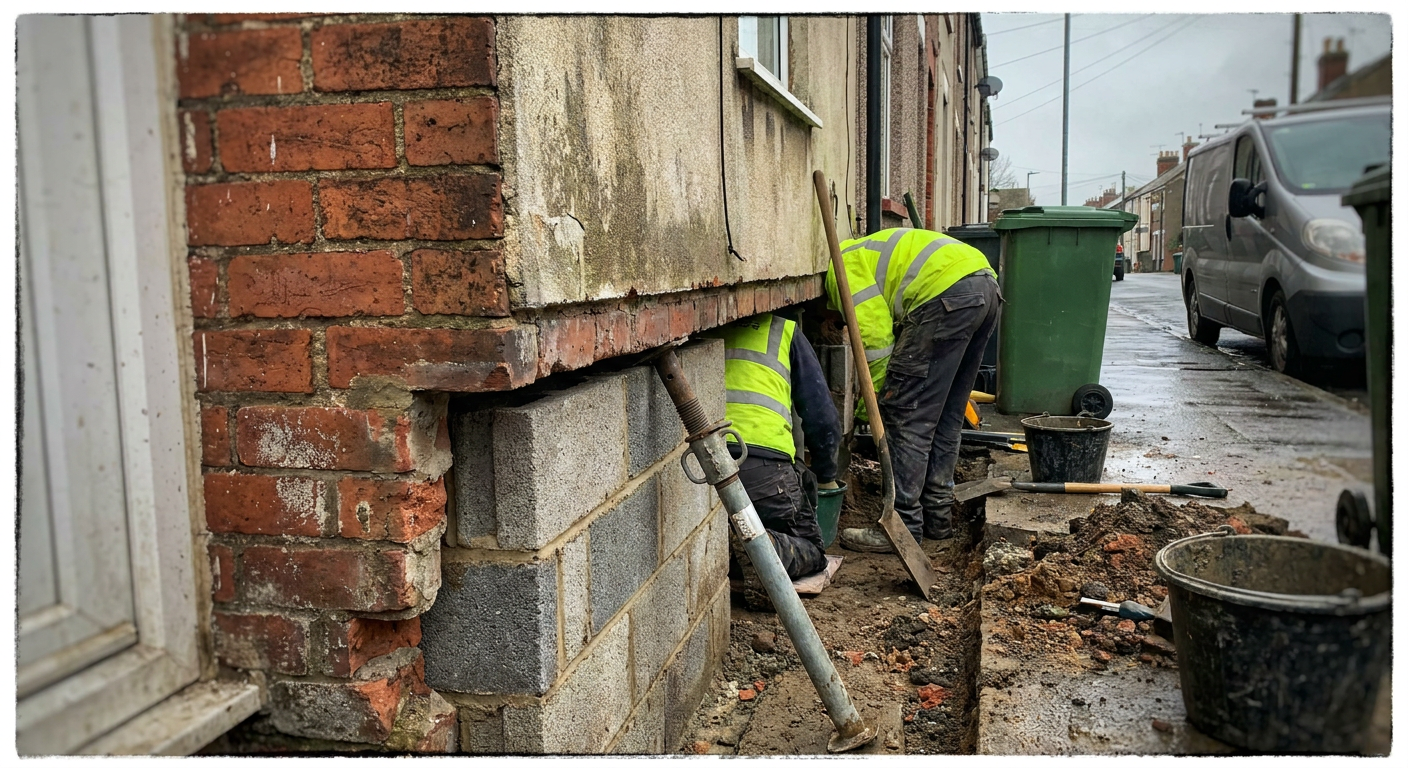
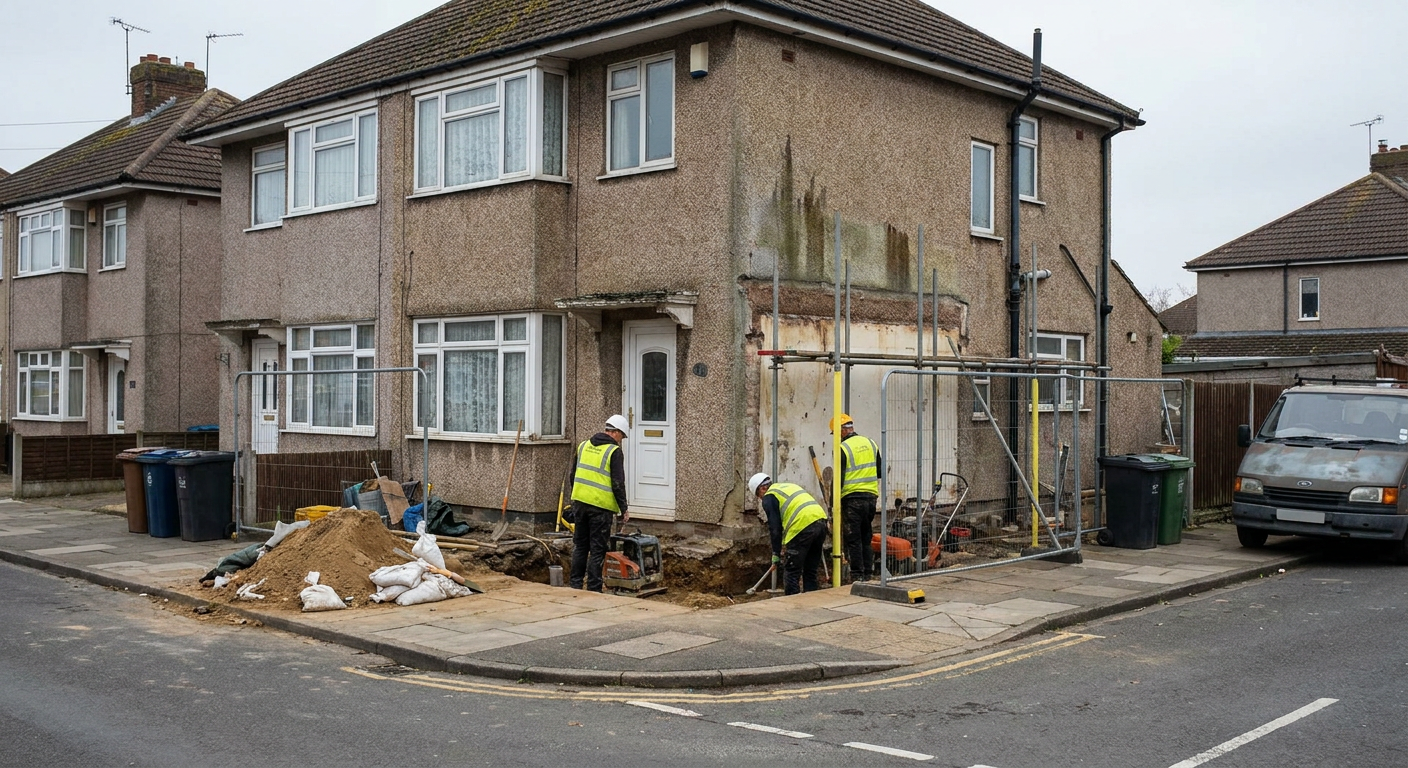
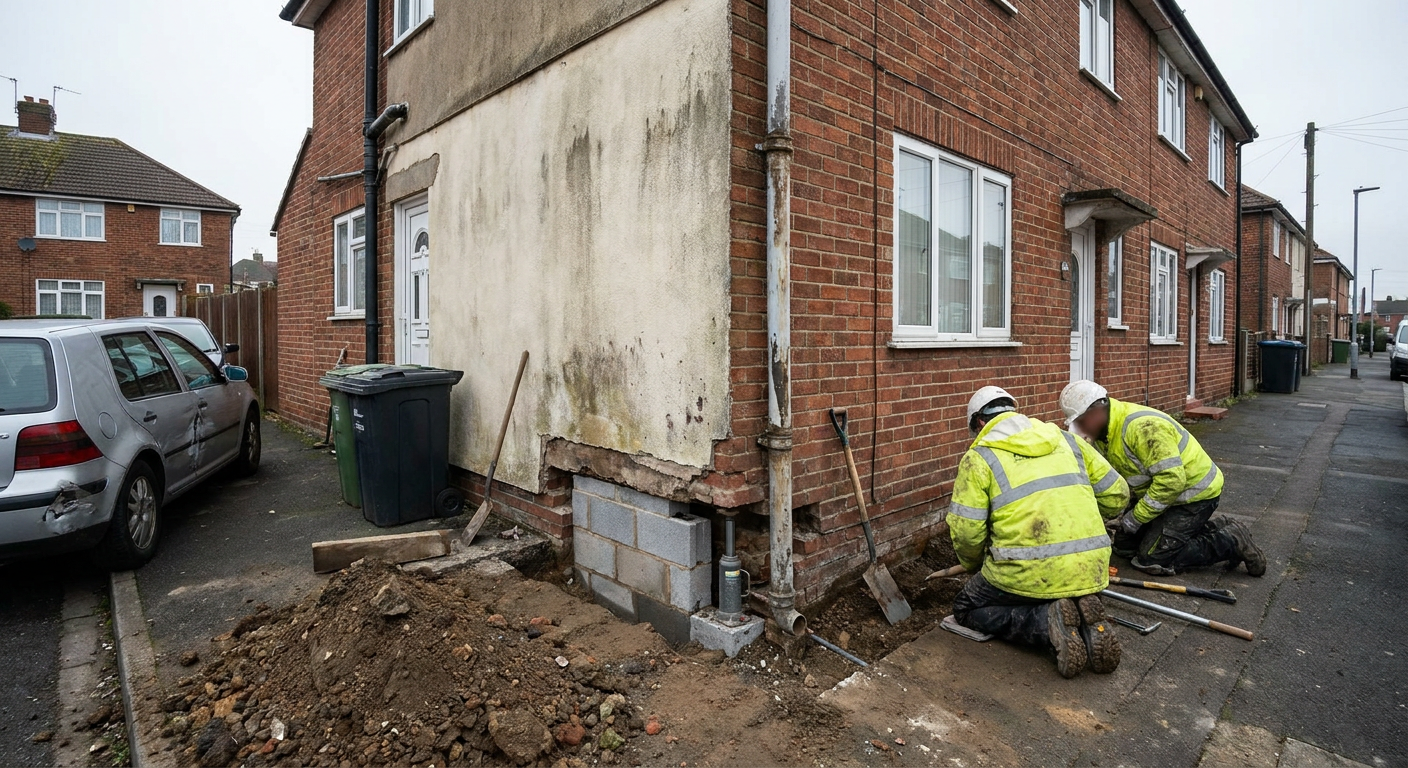
Once a cause is established, the repair depends entirely on what the ground is doing. Mass concrete underpinning involves excavating sections beneath the existing footing and pouring new concrete in stages to reach stable soil. This suits heavier loads and deeper failures.
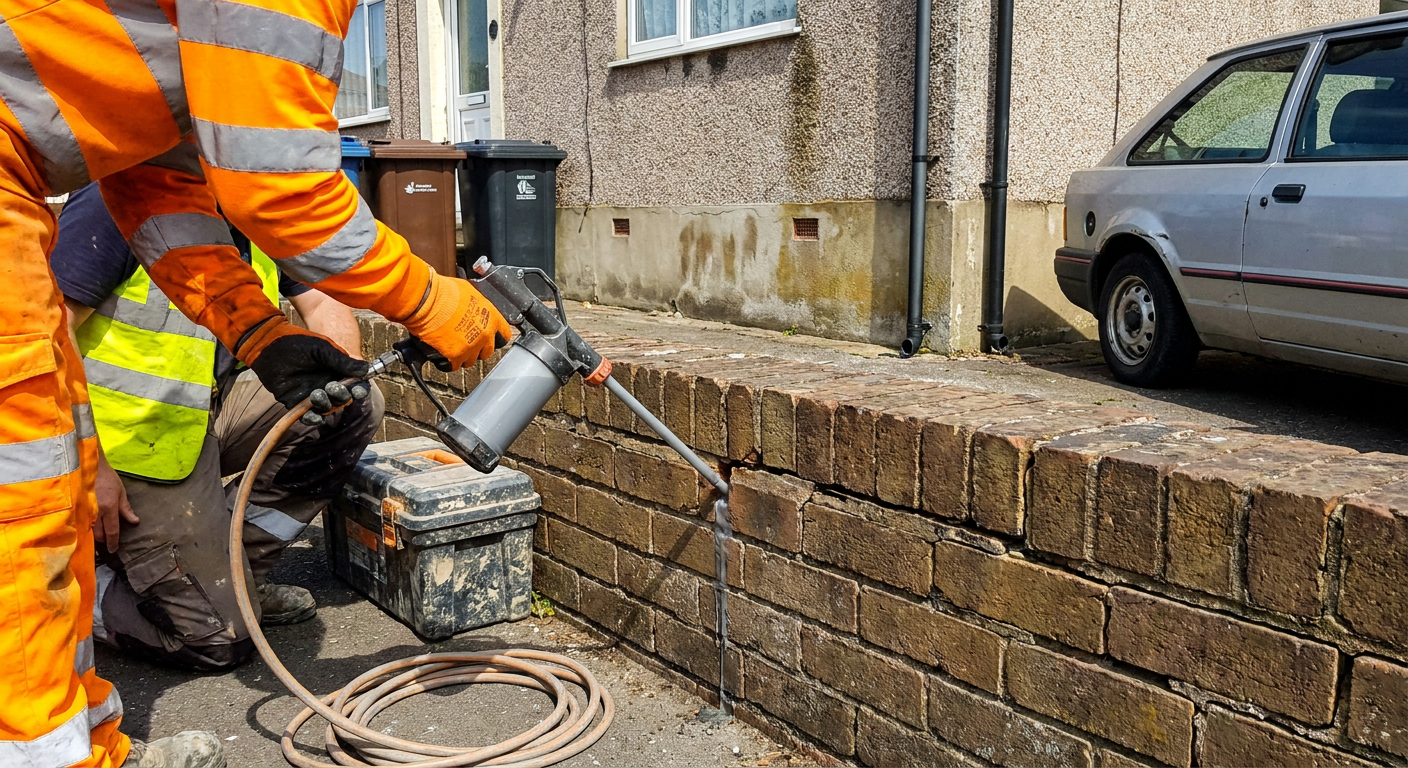
Where space is tight, such as a terraced house sharing party walls with neighbours on both sides, mini piled underpinning drives steel piles down to a load-bearing stratum far below the surface. Resin injection offers another route: a specialist pumps expanding resin into voids beneath the slab to compact loose soil without digging.
Not every crack demands underpinning. Many require only crack repair, stitching the masonry back together with helical bars once the underlying cause, perhaps a blocked gutter saturating the ground, has been sorted. Foundation repair covers everything from replacing a single failed lintel to rebuilding a section of footing. Choosing the right method relies on the survey findings, not on guesswork.
Signs that a crack might mean foundation movement
Movement in the ground beneath a home forces the walls above to shift. Because brickwork and plaster cannot stretch, they split. These signs tell you where to look.
- 1
Diagonal cracks near windows
A gap running at an angle from the corner of a window frame, wider at the top, often points to uneven settlement below that wall.
- 2
Doors catching on frames
A door that sticks or will not latch properly may indicate the frame has twisted because the wall around it has dropped slightly.
- 3
Gaps opening at skirting boards
When the floor drops away from the wall, a visible space appears behind the skirting. This happens slowly and is easy to miss.
- 4
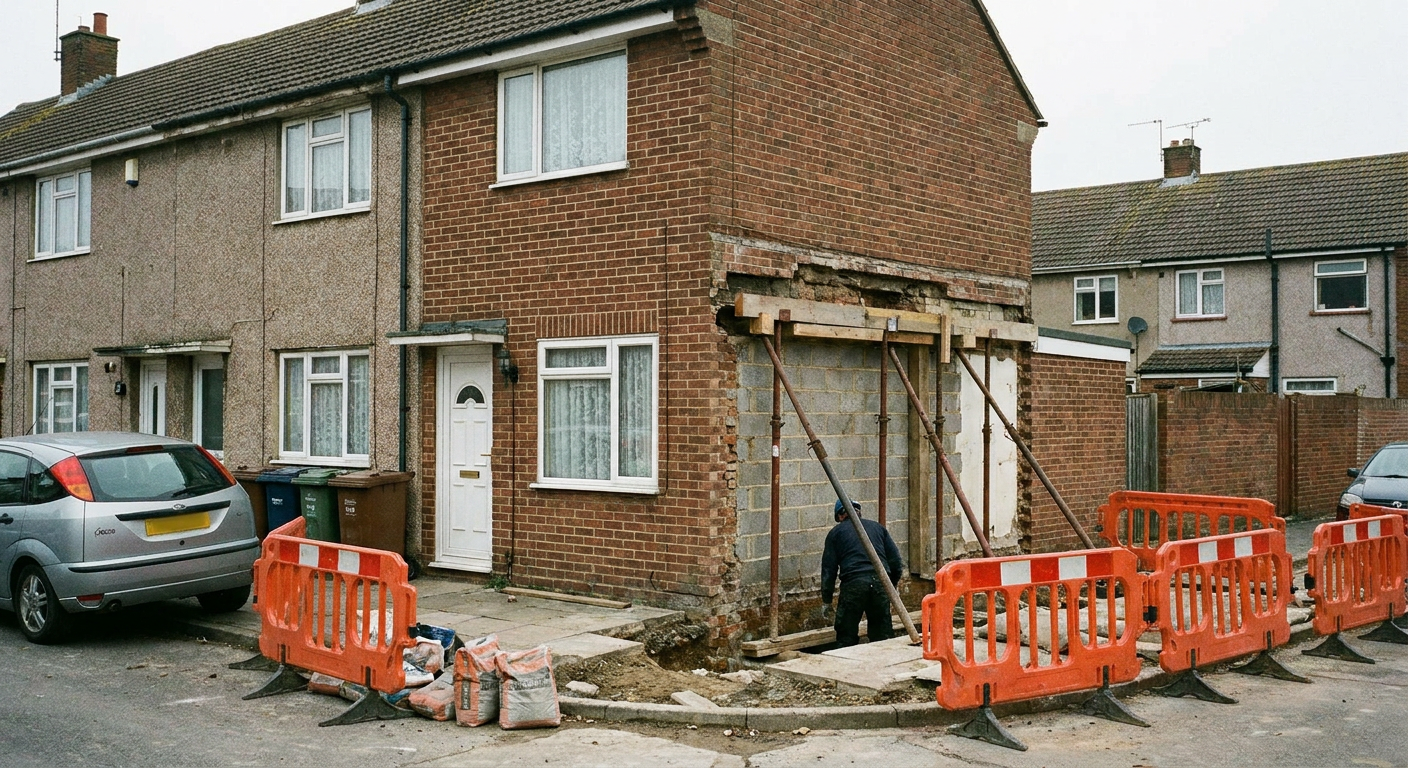
Cracks continuing outside
A line that starts inside and carries through the external brickwork suggests the whole wall thickness is moving, not just the plaster.
Questions people ask before getting in touch
These are the things homeowners typically want answered before they send an enquiry about a crack.
- Is my crack structural or just plaster?
- A hairline crack confined to plasterboard is rarely structural. One that cuts through bricks or blocks needs a closer look. Photographing it helps a specialist judge the severity.
- Will someone visit, and does it cost?
- Specialist firms set their own fees for site visits. Some initial assessments are free, while detailed surveys carry a charge. Ask when you enquire so there are no surprises.
- How long until I hear back?
- A specialist firm reviews the details and replies, usually within a few days. Clear photographs and measurements help them assess the problem without needing to ask questions first, so you find out what the crack means sooner.
- Will I be told honestly if it is nothing?
- Reputable specialists deal in facts. If the movement is cosmetic and requires no underpinning, they will say so. No one benefits from unnecessary work on your home.
- Should I call my insurer first?
- It usually helps to understand the problem before opening a claim. An independent survey gives you evidence to present to the insurer if the damage is covered.
Tell us about the crack in your home
Send a description of what you have found, along with any photographs. You will receive a reply explaining the likely next steps. There is no obligation to proceed with any work.
- No obligation
- Free to ask
- Local knowledge