Cardiff homes
Underpinning and foundation articles for Cardiff homes
Read through the guides below to understand what a crack in your wall means, how local ground behaves, and what underpinning involves. Asking a question about your home costs nothing.
Guides on foundations, cracks and ground in Cardiff
Reading the cracks in your walls
A crack in plaster does not always mean the house is falling down. Seasonal changes make materials expand and contract, so hairline marks near windows or doors often come and go with the weather. Read more about whether cracks get worse in winter and what cold weather movement actually does to masonry.
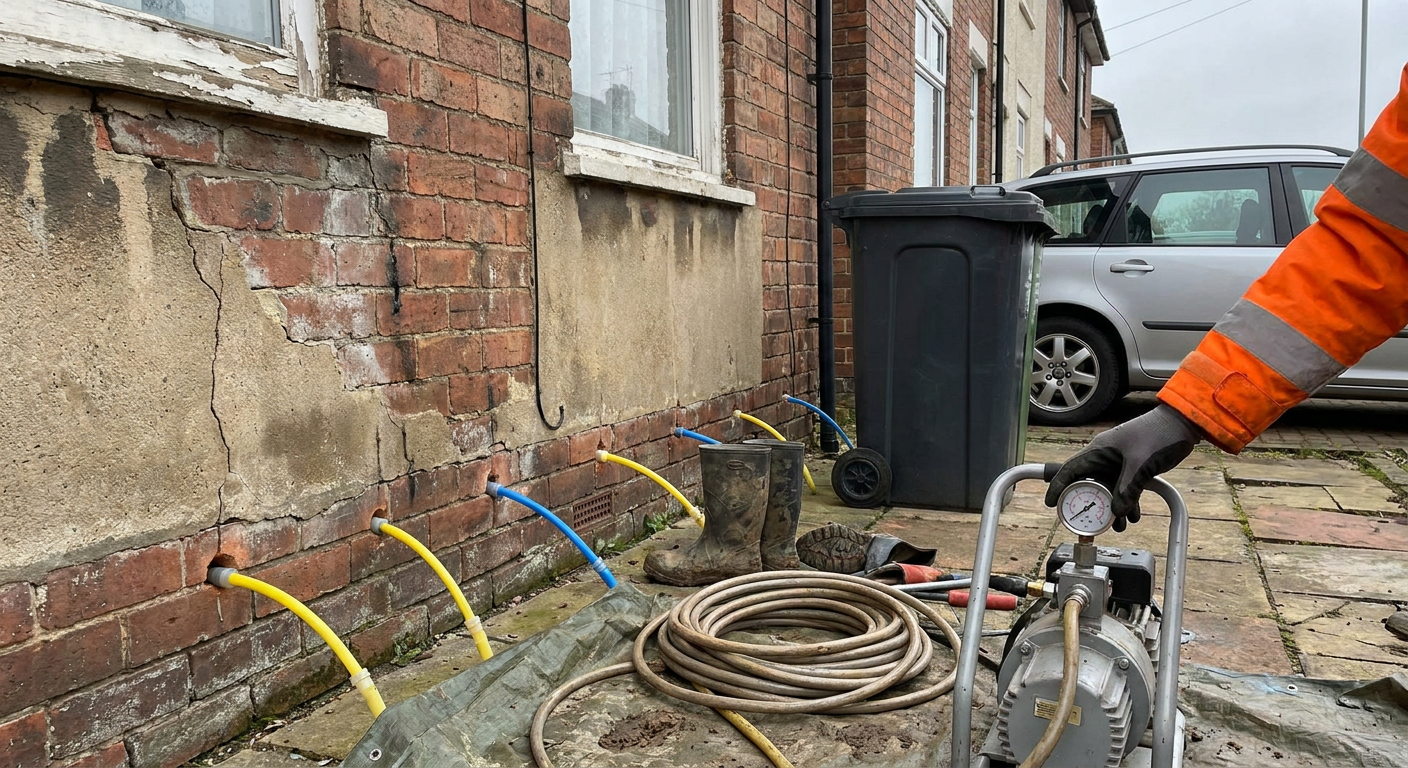
Some cracks do point to foundation movement. If a gap is wider than a few millimetres, runs diagonally across a brick wall, or keeps opening after you fill it, the ground beneath might be shifting. Clay soil shrinkage is a common cause around Cardiff, where dry summers pull moisture from the earth and let foundations settle unevenly. Trees planted too close to the house can have the same effect, as their roots draw water from the clay.
Before anyone suggests underpinning, a specialist firm will want to know if the movement is still happening. Crack monitoring tracks whether a gap widens over weeks or months. That record tells the contractor whether the problem has stopped or needs structural work.
Ground conditions beneath Cardiff streets
Cardiff sits on varied geology, and the ground under one street can behave completely differently from the next. Homes built on old dock land rest on made ground, which compresses over time and sometimes settles unevenly decades after construction. Knowing what lies beneath your floor helps explain why a wall has started to lean or crack.
In other parts of the city, Mercia mudstone lies under the topsoil. This rock weathers into a soft clay that shrinks when it dries out, pulling support away from shallow foundations. North Cardiff presents another problem entirely: limestone bedrock can dissolve slowly where water flows through it, leaving voids or swallow holes that open up without warning in gardens.
Water escaping from a broken drainpipe is a frequent trigger for subsidence. A slow leak washes fine particles out of the soil, leaving empty space for the foundation to drop into. If you notice damp patches near the base of an outside wall, or sinking paving slabs close to a downpipe, a leaking drain could be the cause.
Surveys, insurance and buying a home
A subsidence survey carried out by a specialist firm examines the damage, tests the ground and determines whether a building is still moving. If you are buying a house and the valuation mentions structural movement, the mortgage lender will pause until the situation is clear. A [house survey that says subsidence](/ground/survey-mentions-subsidence) changes the timeline for any purchase, so finding out what the signs mean early on helps you decide whether to proceed.
Most buildings insurance policies cover subsidence, but the claims process takes time. Insurers typically want evidence that the cause has been identified and stopped before they approve repairs. Understanding [what your policy expects](/ground/subsidence-and-buildings-insurance-cardiff) prevents delays and arguments later on.
The cost of underpinning depends on the method chosen, the depth required and how much of the home is affected. Prices vary widely between a single corner repair and a full perimeter job. Reading through [what drives underpinning cost](/ground/what-drives-underpinning-cost) gives you a realistic idea before any contractor visits.
How underpinning work is done
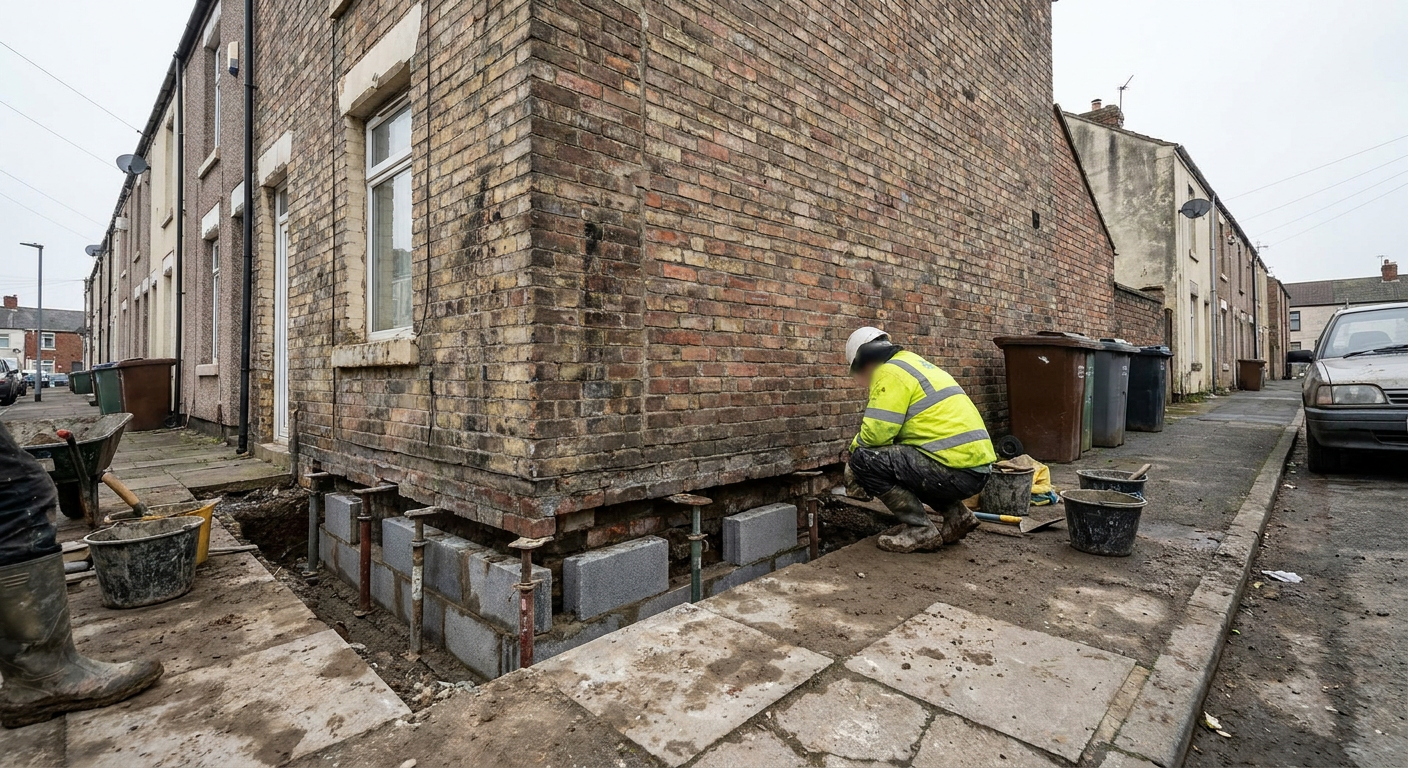
Once a specialist firm confirms that the foundations need support, several methods are available. Mass concrete underpinning is the traditional approach: sections of soil are dug out beneath the existing wall and filled with concrete in a planned sequence, so the house never loses support at any point.
Where the stable ground is too deep for trenches, mini piled underpinning drives steel-cased piles down to a load-bearing layer. The new piles carry the weight of the wall through brackets fixed to the existing foundation. Resin injection offers another route, pumping expanding material into the soil to compact loose ground and lift settled floors back towards their original level.
Basement underpinning lowers the floor of an existing cellar to create more headroom while strengthening the walls above it. Every method requires building control approval in Cardiff, and the paperwork must be kept safely on file for future buyers or insurers. Choosing the right underpinning contractor matters, because the work affects the whole structure of your home.
Living in terraced houses and older buildings
Victorian terraces make up a large part of Cardiff's housing stock. Their shallow brick foundations were built for a different era, and many have already moved once or twice. Cracks in these older homes follow predictable patterns, often appearing at the junctions where party walls meet the front or rear facades.
Underpinning a terraced house brings extra complications. The shared wall connects your home directly to your neighbour's, so any excavation underneath it affects both properties. Specialist firms must plan the work carefully and communicate with adjoining owners before digging begins.
Understanding how deep underpinning goes beneath a house wall helps set expectations. The new concrete or piles must reach ground that will not move again, which sometimes means working several metres below the surface. The certificates issued after completion prove the work meets regulations, and keeping them on file protects the value of your home.
Tell us what you have noticed
Send details of the crack or movement you have spotted. A specialist firm will review what you describe and suggest the right next step, with no obligation to proceed.
- No obligation to proceed
- Reviewed by a specialist firm
- Free initial assessment