Cardiff guides
Subsidence guides for Cardiff homeowners
Read through the guides below to understand what a crack or sinking floor might mean. If you need someone to look at your home, send an enquiry. There is no charge for asking.
Understanding subsidence and surveys in your home
A hairline crack above a door frame might be nothing. A gap that widens over a few months is something else entirely. The first step is knowing which signs point to movement beneath the foundations and which are just plaster drying out.
A specialist firm carries out a subsidence survey to measure the extent of any movement and identify what is causing it. That could be clay shrinking under the walls, a leaking drain washing soil away, or tree roots drawing moisture from the ground. Each cause demands a different response.
If you are buying a house and the surveyor mentions subsidence, the next steps depend on how far the movement has gone. Some cases need monitoring before anyone commits to repair work. Others require immediate intervention to stop the structure shifting further. Reading about what a survey involves helps you ask the right questions before you instruct one.
Repair methods used beneath Cardiff houses
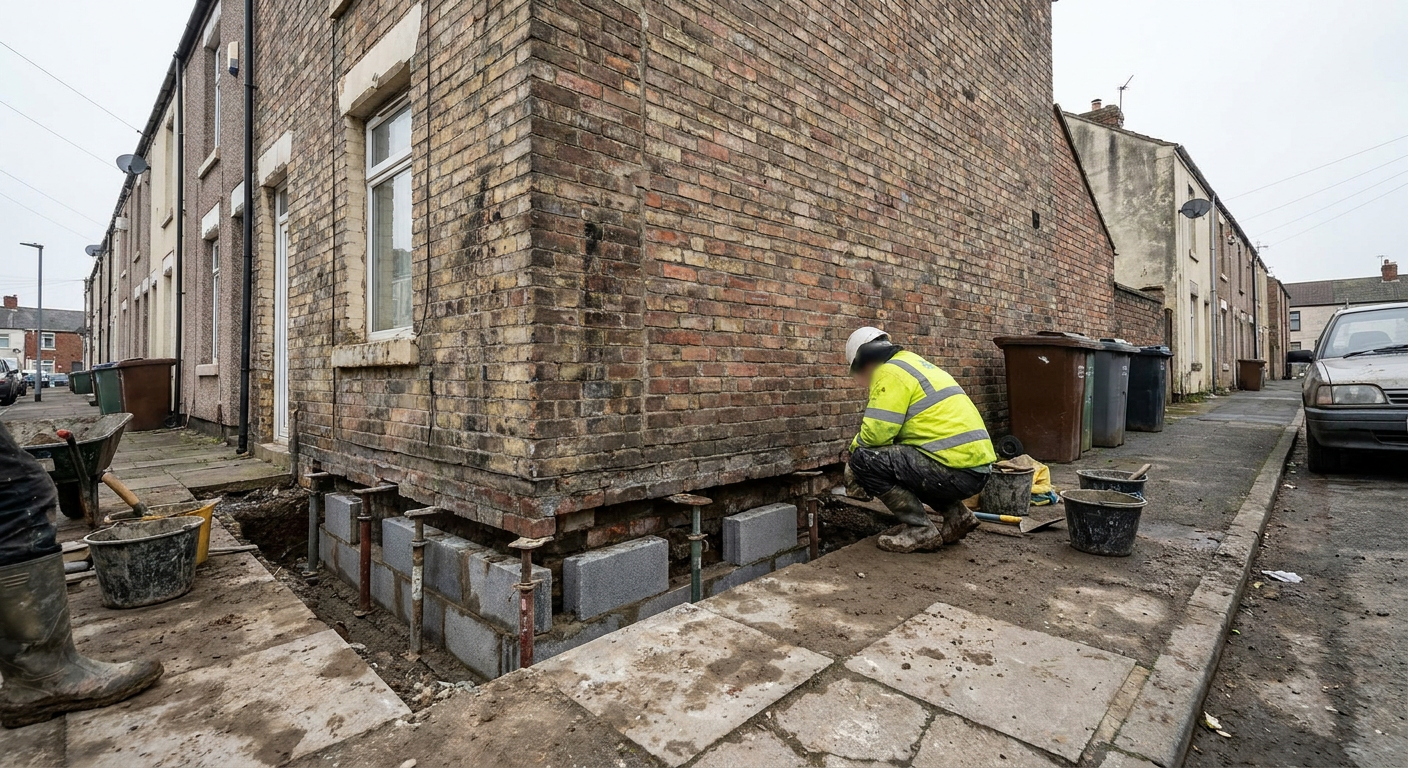
Once the cause of movement is known, the specialist firm decides how to stabilise the foundations. Mass concrete underpinning involves excavating sections beneath the wall and pouring new concrete to create a deeper base. It suits homes where the existing footing simply does not reach stable ground.
Where the solid stratum is much deeper, mini piled underpinning drives steel piles down until they rest on load-bearing rock or compacted soil. The house weight transfers onto these piles rather than the shallow earth that failed.
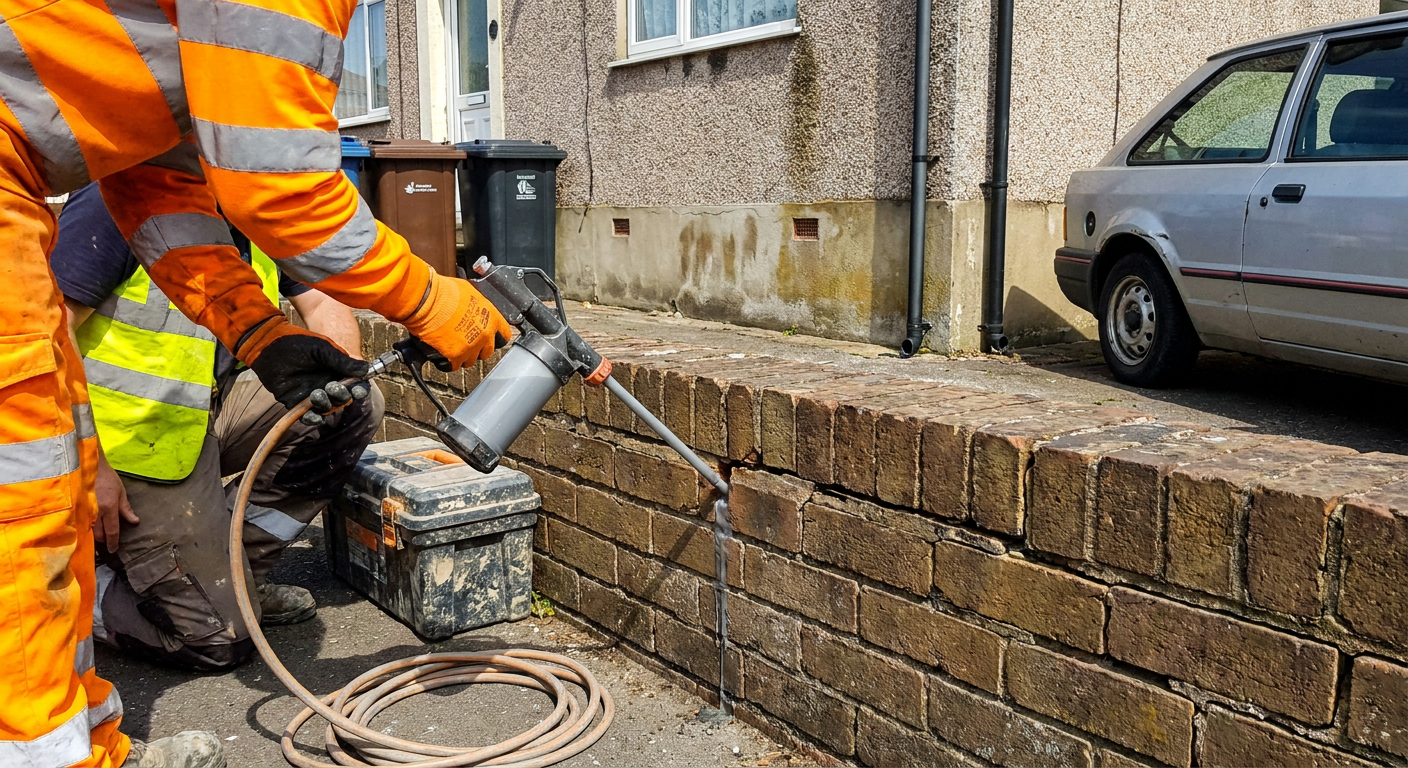
Resin injection works differently. A specialist pumps expanding resin into voids beneath the slab or footing, compacting loose soil and lifting settled areas back towards their original level. It avoids large excavations and suits situations where access is tight.
Crack repair addresses the visible damage after the ground is stabilised. Not every crack needs structural stitching. Some close on their own once the foundation stops moving. A specialist assesses which ones require tying back together and which only need filling and redecorating.
Tracking movement and managing insurance claims
Before any heavy work begins, a period of structural monitoring often takes place. Tell-tales fixed across a crack record whether it is still opening, closing, or staying put. This data tells the specialist firm whether the movement is active or historic, which changes everything about the approach they recommend.
Buildings insurance usually covers subsidence damage, but making a claim involves paperwork, excess payments and sometimes a long wait while loss adjusters review the evidence. Understanding what insurers expect helps you prepare the right documents from the start.
Cost depends on the method, the depth required, and how much of the house is affected. Underpinning a single corner costs less than stabilising a whole terrace wall. Getting a clear picture of what drives the price means you can read a quote without guessing what each line refers to.
Ground conditions specific to Cardiff
The geology under Cardiff varies street by street. Homes built on old dock land sit on made ground, which compresses unpredictably over time. In other areas, Mercia mudstone shrinks and swells with the seasons, pulling at shallow foundations as the weather changes.
North Cardiff sits on limestone in places. Water dissolving the rock underground creates cavities that eventually collapse into swallow holes, taking garden walls and paths with them. Knowing what lies beneath your postcode explains why neighbouring houses behave differently.
Victorian terraces present their own problems. They were built with shallow footings on whatever soil was there, and decades of leaking drains or newly planted trees have altered the ground since. A guide to cracks in these older properties separates normal settling from genuine structural risk.
Practical steps you can take yourself
You do not need to wait for a specialist to start paying attention to your walls. Monitoring a crack yourself requires a pencil, a ruler and a calendar. Mark the ends of the crack and check weekly whether it has grown past your lines. Note the date and width each time.
Cold weather changes things. Cracks often open wider in winter as materials contract and the ground outside cools. This seasonal movement is different from progressive subsidence, which continues regardless of the temperature. Learning to tell the difference stops unnecessary worry.
Trees near foundations draw water from the soil, especially during dry summers. If a large tree stands close to the wall where cracks appeared, its roots may be the cause. Checking the distance between trunk and house gives you a starting point before calling anyone.
Arranging the work and handling neighbours
Choosing who does the work matters as much as choosing the method. Underpinning contractors vary in the equipment they carry and the ground conditions they are used to. Asking the right questions before agreeing to a quote prevents delays once digging starts.
In a terraced house, stabilising your foundations affects the shared party wall. Neighbours need to be informed, and sometimes their consent is required before excavation begins beside their property. A guide to terraced underpinning sets out who must be told and when.
Building control approval is mandatory for underpinning in Cardiff. The local authority checks that the design suits the ground and that the finished work meets regulations. Keeping the completion certificate safe matters later if you sell the house. So does understanding exactly how deep the new concrete goes beneath your wall.
Ask about a problem with your home
Send details of what you have noticed. The information goes to a specialist firm who handles foundation work in Cardiff. There is no fee for the initial enquiry and no obligation to proceed.
- No fee to enquire
- No obligation to proceed
- Local firms respond
Guides
- Clay soil cracks
Clay soil cracks in walls often widen in dry summers as the ground shrinks back. Which crack patterns point to subsidence, and what checks come next.
- Leaking drains
A leaking drain can cause subsidence by washing soil out from under foundations. The signs to look for and what drain surveys and repairs involve.
- Trees and foundations
A tree too close to house foundations can dry out clay soil and pull walls down. What distances matter, which species dry most and when to get a survey.
- Monitoring a crack
Wondering if your wall crack is getting bigger? How to mark, measure and date a crack over weeks, and the signs that mean a survey is needed.
- Cracks in winter
Cracks can look worse in winter as ground and materials move with cold, wet weather. See which seasonal cracks settle and which point to subsidence.
- Insurance
Subsidence is covered by most buildings insurance policies, subject to an excess. What a claim in Cardiff involves, from first report to monitoring.
- Survey findings
A house survey that says subsidence is not the end of a purchase. What the wording means, what to ask next, and when a structural survey helps.
- Underpinning cost
Underpinning cost depends on depth, access, soil and the length of wall involved. Read what drives the figure up or down before asking for quotes.
- Help and advice
Cracks in walls can be harmless settlement or a sign of subsidence. This advice covers crack widths, patterns to watch and when a survey is worth it.