Areas covered
Areas covered around Cardiff for underpinning
Send details of the crack or movement you have noticed at home. A specialist firm will read what you describe and reply with their view on whether the ground needs work, without charging you for that first look.
Penarth and the coastal edge
Homes in Penarth sit on ground that slopes down toward the Bristol Channel. The soil here changes from solid rock near the top to softer deposits closer to the water. That variation means one end of a house can settle differently from the other.
A crack running diagonally from a window frame toward the floor often points to this kind of uneven movement. Subsidence in Penarth follows patterns tied to the cliffs and the old railway cuttings that run through the town. If you have spotted widening gaps in your brickwork, find out what causes them and what a homeowner should do next.
Specialist firms carry out surveys in the area to measure how much the walls have shifted. They use those readings to decide whether the foundations need underpinning or whether the ground simply needs time to settle after a dry spell.
Dinas Powys and the valley soils
Dinas Powys sits in a narrow valley where the ground holds more moisture than the exposed ridges around it. Trees grow tall here, and their roots reach deep into the clay beneath the houses. When summer dries the soil out, those roots pull water from directly under the footings.
That shrinkage shows up as hairline cracks in plaster first, then wider gaps in the external brickwork over several seasons. Underpinning in Dinas Powys addresses the specific way valley clay moves. A specialist firm will check the depth of the existing foundations before recommending any work.
If you live near the stream or the older parts of the village, the made ground left by previous building phases can compress under the weight of a house. Understanding how local subsidence behaves helps you decide whether to monitor a crack or call for a survey straight away.
North Cardiff and limestone ground
The northern suburbs of Cardiff sit on a mix of Mercia mudstone and carboniferous limestone. Limestone dissolves slowly in rainwater, and over centuries it leaves cavities underground. Swallow holes appear in gardens when the roof of one of these voids gives way.
Houses built above this geology sometimes develop sudden cracks that do not follow the slow seasonal pattern seen on clay. If your home is in Whitchurch, Rhiwbina or Thornhill, the type of rock below matters as much as the age of the building. Specialist firms who handle foundation repair in Cardiff know which streets sit on the limestone boundary.
They use trial holes and boreholes to confirm what is underneath before designing a fix. Knowing the ground conditions prevents wasted effort and ensures the chosen method reaches stable strata rather than resting on hollow rock.
Central terraces and Victorian brickwork
Cardiff grew fast during the coal trade, and thousands of terraced houses went up in a few decades. Many were built quickly, with shallow foundations laid directly on whatever ground the builders found. Made ground from old dock land and filled ponds sits beneath whole streets in Butetown and Grangetown.
Victorian terraces share party walls, so movement in one house affects the next. Underpinning a terraced house requires care because digging beneath a shared wall risks destabilising the neighbour. Specialist contractors plan the sequence of excavation to keep both sides supported throughout the job.
Cracks in these older walls often open along the mortar joints rather than through the bricks themselves. Monitoring the width of a gap over twelve months tells a structural engineer whether the movement has stopped or is still active. That record determines if mass concrete or another method suits the terrace best.
How the right method fits the area
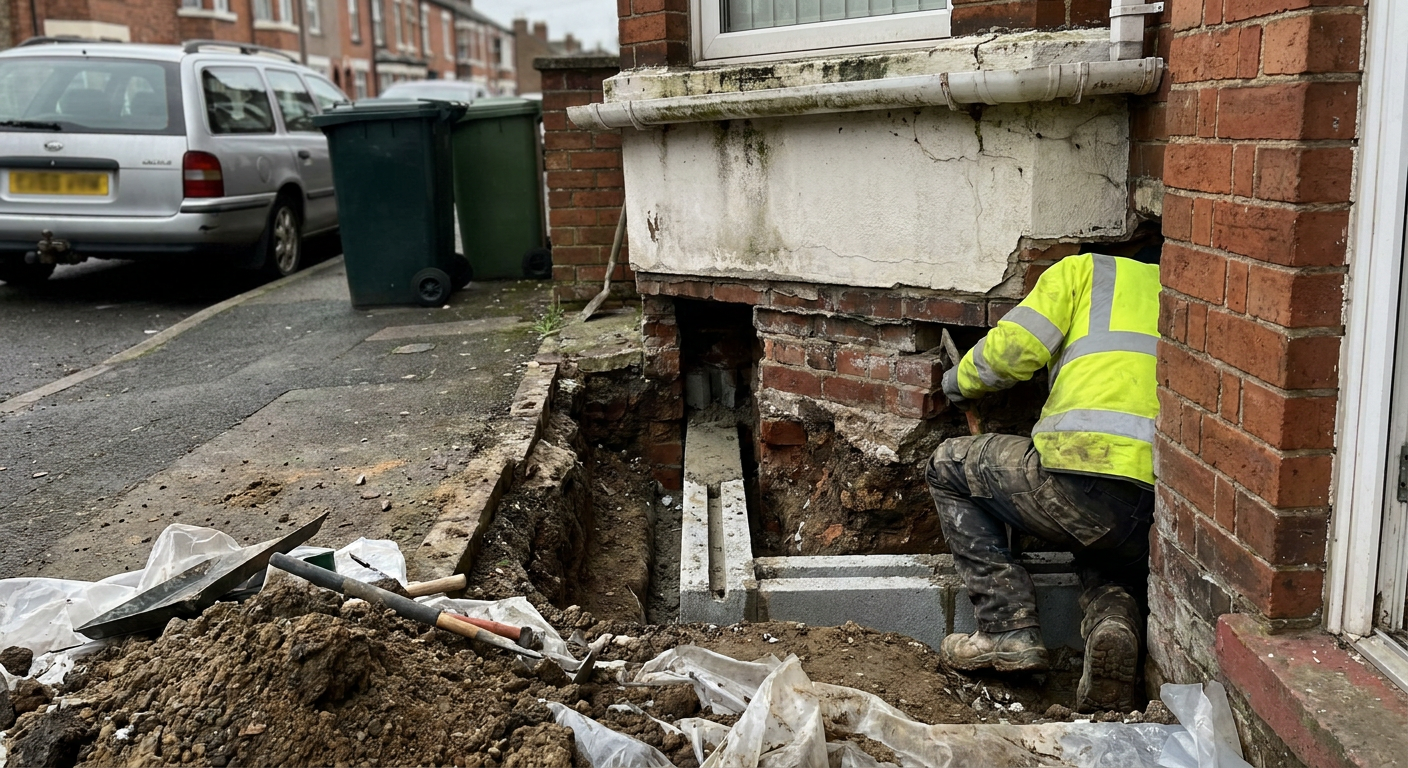
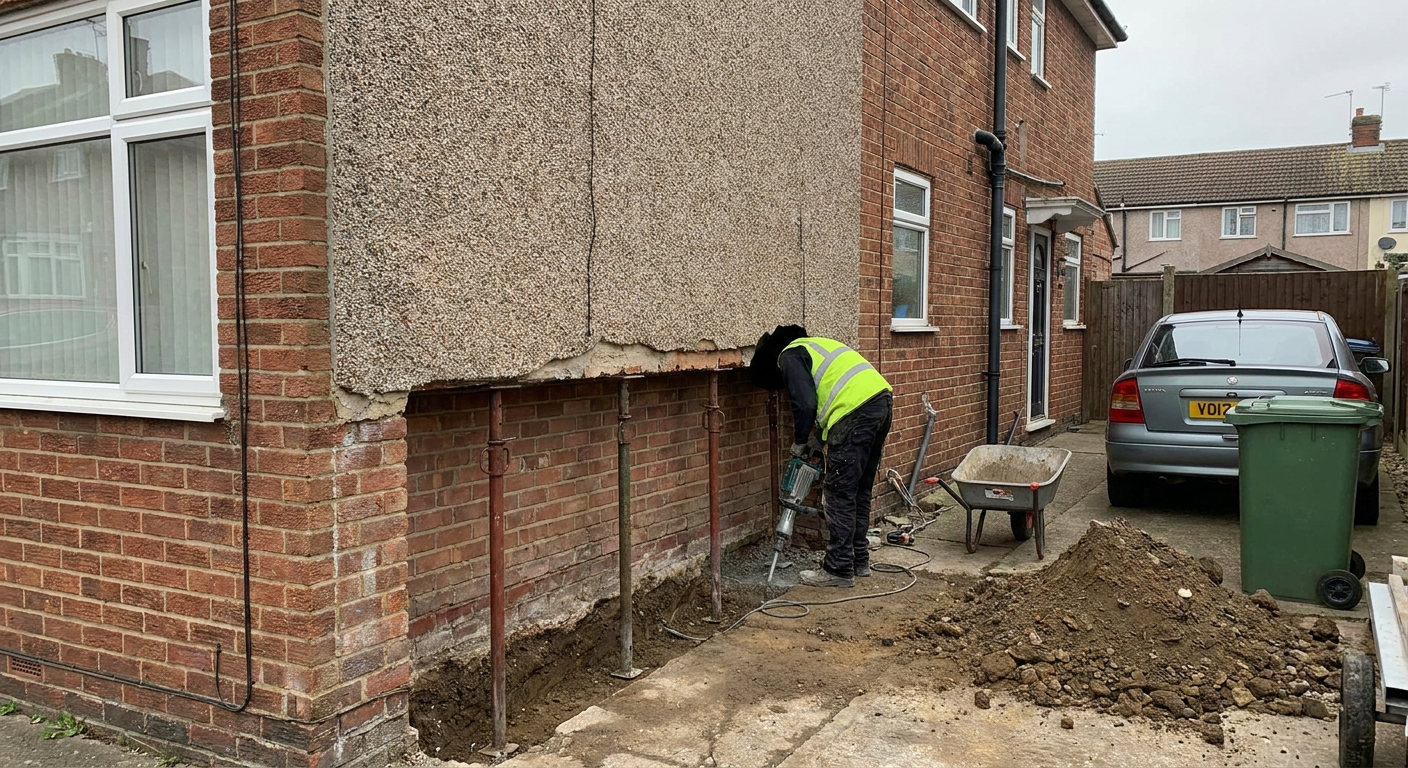
Different parts of Cardiff demand different approaches to stabilising a home. Where the ground is soft and deep, mini piled underpinning drives steel columns down to a load-bearing layer far below the surface. In shallower conditions, mass concrete underpinning fills the space beneath an existing footing in short sections.
Resin injection works where access is tight, pumping expanding material into the soil to compact it without heavy excavation. Basement underpinning lowers a floor while strengthening the walls around it, a method suited to older city-centre homes where space is limited.
A subsidence survey establishes which technique matches the soil and the structure. Once the cause is clear, a specialist firm quotes for the exact work required. You can read about every method used in Cardiff to understand what each involves before deciding how to proceed.
Tell us where your home is and what you see
Write down the street name and describe the crack or sticking door. A specialist firm reviews the details and replies with their initial thoughts, free of charge and without committing you to any work.
- No fee for the first look
- No obligation to proceed
- Local ground knowledge
Areas covered
- Penarth
Subsidence in Penarth shows up as tapering cracks, sticking doors and sloping floors. Learn which signs point to movement and what a survey covers.
- Dinas Powys
Underpinning in Dinas Powys explained: what causes foundation movement, which cracks are worth checking, and how a survey leads to the right repair.