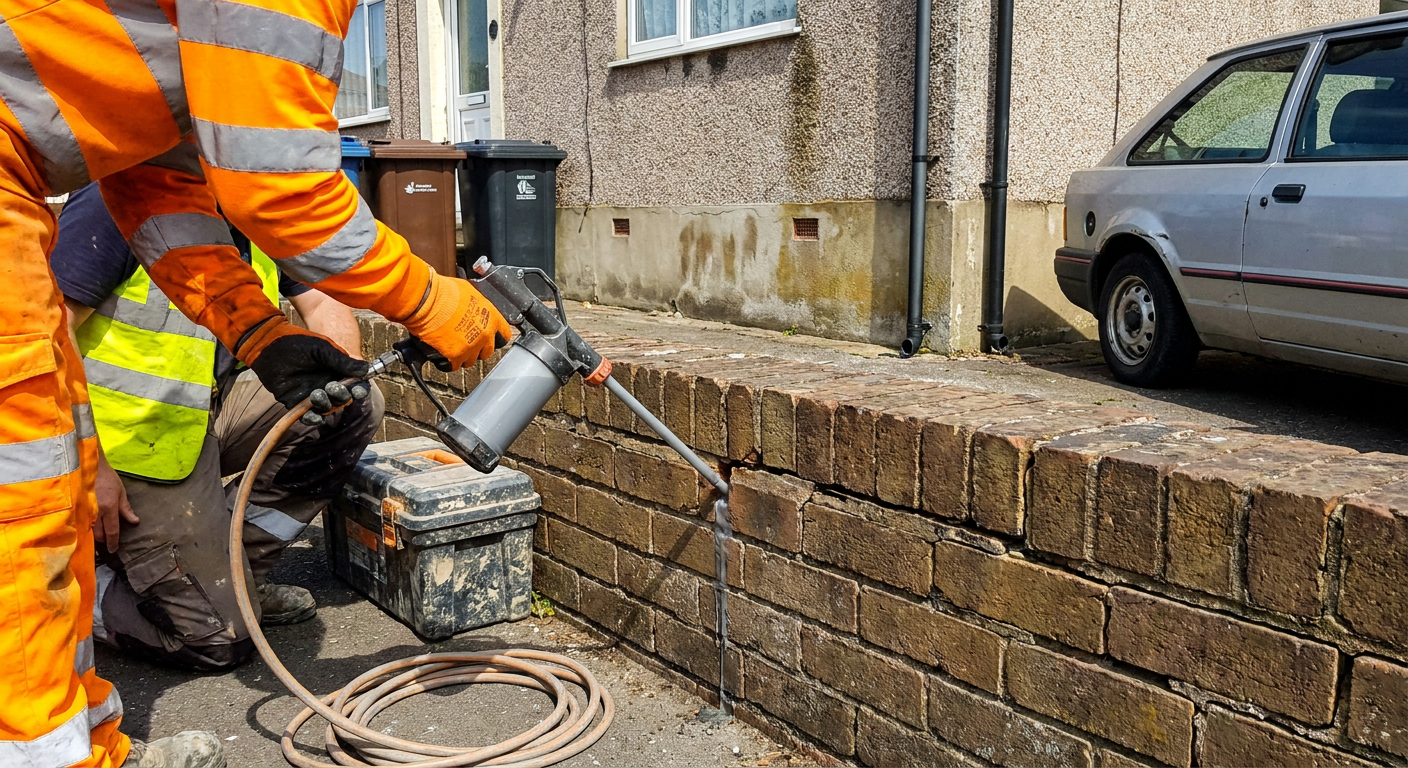
Crack repair Cardiff
Crack repair in Cardiff for walls and ceilings
Send the details of the damage you have noticed. A specialist firm will review it and explain what the crack means, without charging you anything or committing you to work.
What the cracks in your brickwork actually mean
Finding out if your cracks are serious starts with looking at where they sit on the wall and how wide they have opened.
- Hairline plaster cracks Thin lines in interior plaster often follow normal drying or seasonal temperature changes. They rarely point to a foundation problem and usually need only decoration.
- Diagonal crack above window A diagonal crack above window frames suggests the lintel has shifted or the ground beneath has settled unevenly. This needs a survey before any cosmetic repair.
- Stepped cracks in brickwork Cracks in brickwork across Cardiff that step along the mortar joints typically show one section of the wall dropping away from another. The cause must be found first.
- Gaps around door frames Doors that stick or frames that pull away from the wall indicate movement in the structure behind them. Repointing alone will not stop the frame distorting again.
How a specialist repairs the wall
- Wall crack stitching repair
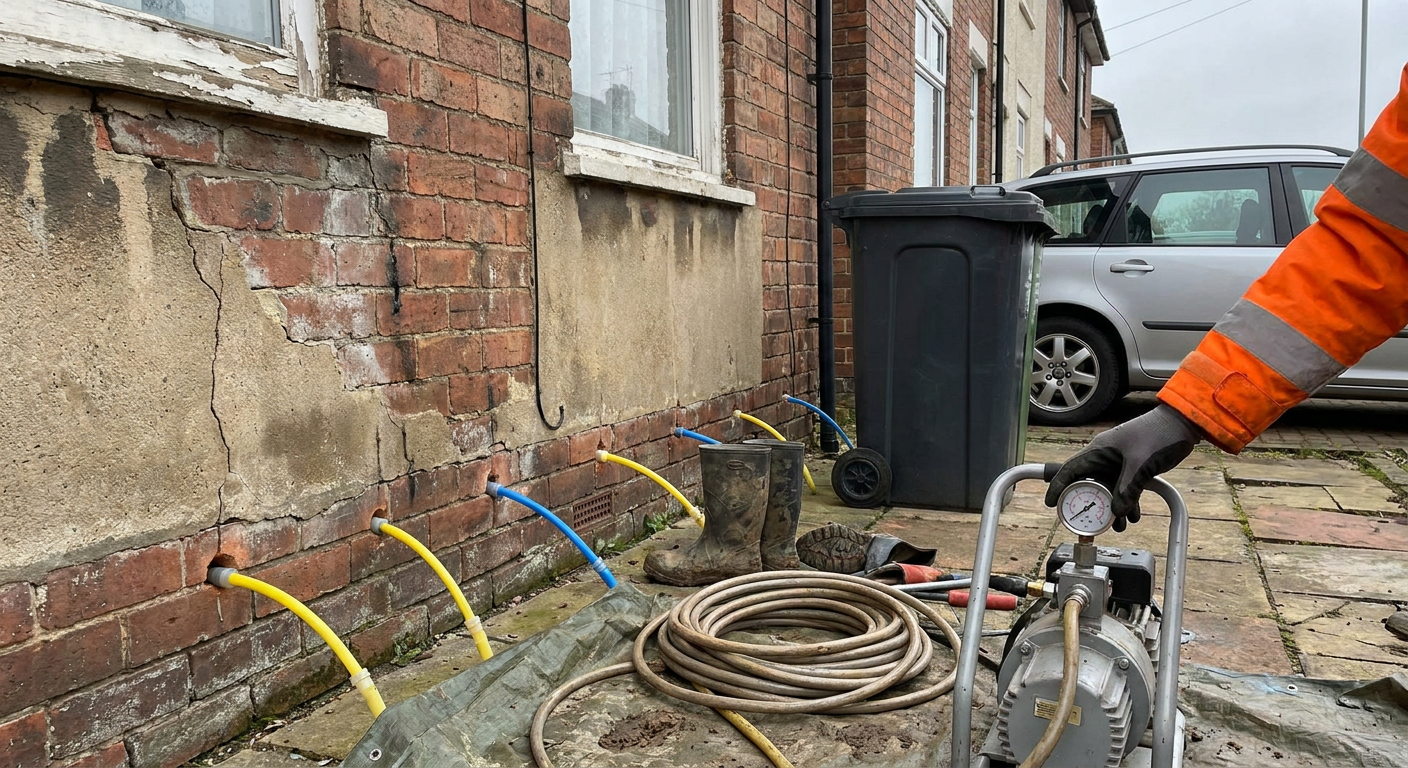
- A specialist cuts slots into the mortar beds and grouts in stainless steel bars. This wall crack stitching repair ties the separated bricks back together once the ground is stable.
- Helical bar wall repair
- Helical bars are twisted steel rods bedded into the masonry to restore tensile strength. A helical bar wall repair sits within the mortar so it remains hidden once repointed.
- Rebuilding damaged sections
- Where movement has pushed a wall out of line or shattered bricks beyond saving, the specialist dismantles and rebuilds that section on the stabilised foundation.
- Resin bonded injection
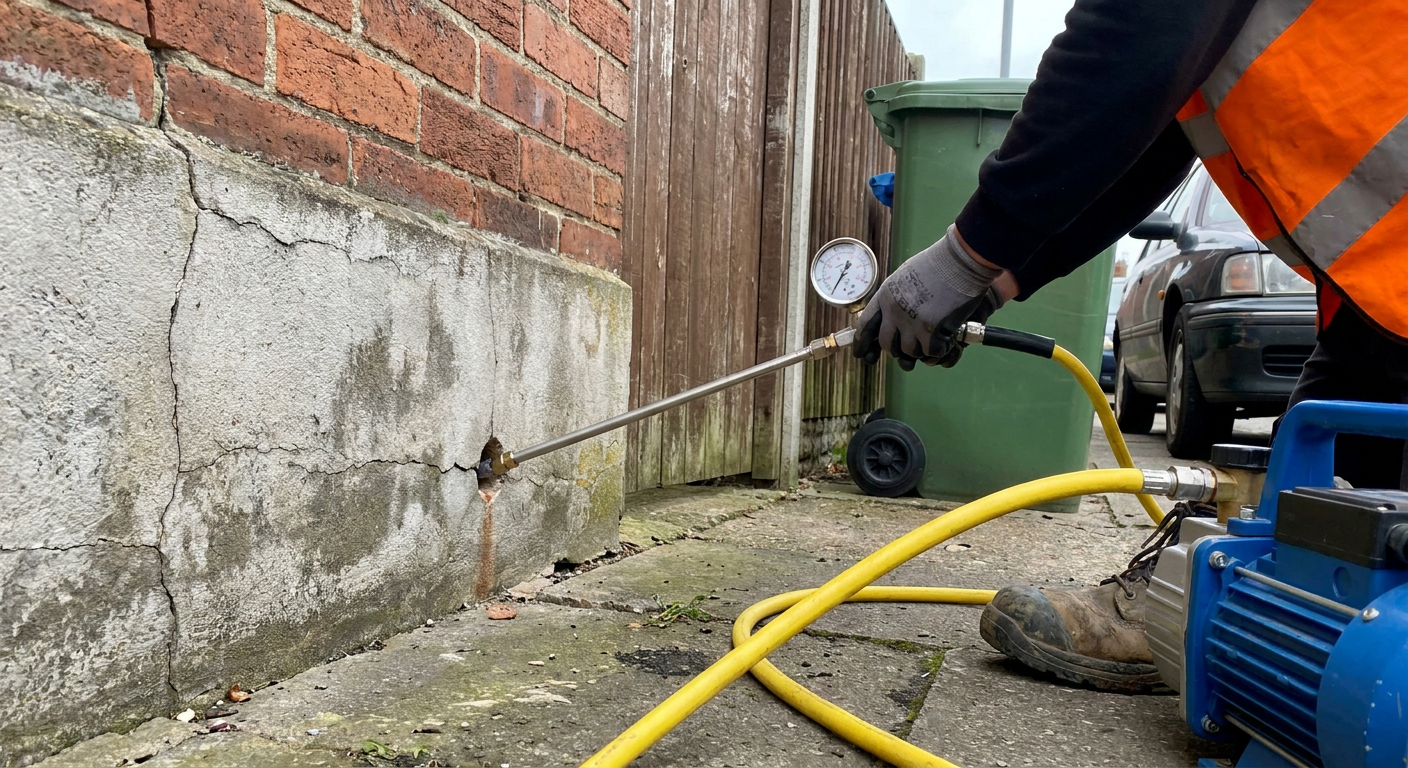
- For fine structural cracks, resin is injected under pressure to bond the masonry faces together. This seals the gap and restores rigidity without removing bricks.
Questions about cracks and fixing them
Homeowners ask these when they first notice damage. The answers depend on what the ground beneath the house is doing.
How do I tell a settlement crack from something structural?
Settlement cracks tend to be thin, taper off quickly and appear soon after a house is built. Structural movement leaves wider gaps that run through bricks rather than just the mortar. A subsidence survey confirms which one you have.
The crack runs diagonally from the window corner, should I worry?
Yes. A diagonal line running from a corner usually means the foundation below that point has dropped. Do not fill it and forget it. Ask a specialist to check the ground conditions before decorating over it.
Can you just stitch and repoint, or fix the cause first?
No, repairing the surface fails if the ground is still moving. The cause, such as clay shrinkage or a leaking drain, must be resolved first. Otherwise the new stitches will simply tear out again.
What are helical bars and will the repair show outside?
Helical bars are stainless steel rods twisted into cut slots in the mortar. Once grouted over and repointed, the repair blends with the surrounding wall. You cannot see them from the outside after finishing.
Should I wait until cracks stop moving before repairing?
Yes. A specialist monitors the wall to confirm movement has ceased. Repairing an active crack wastes money because it will reopen. Monitoring tracks whether the gap is still widening.
How much does crack stitching cost compared with rebuilding?
Stitching costs far less than rebuilding because it keeps the existing bricks in place. Rebuilding requires scaffolding, new materials and matching old brickwork. Stitching is always preferred unless the wall is too far gone.
Will my insurer pay for crack repair or is it maintenance?
Insurers cover sudden subsidence but exclude gradual wear or thermal movement. If the damage stems from an insured event like a burst pipe, the claim may cover both the ground fix and the masonry repair.
We are selling, will a repaired crack need declaring to buyers?
Yes. You must declare past subsidence and any structural repairs on the property information form. Buyers will likely commission their own survey, so keeping paperwork from the specialist matters.
Areas covered for crack repair in Cardiff
Enquiries are taken from homeowners across the city and its surrounding towns. Specialist firms carry out the surveys and masonry repairs wherever the ground has caused damage.
If your street is not listed, send an enquiry anyway. Coverage extends throughout the wider region.
Tell us what you have noticed
Write down where the crack is and how wide it looks. The details go to a specialist firm who will explain what it means. Nothing commits you to paying for work.
- No obligation to proceed
- Free initial assessment
- Local specialists only