Cardiff
Subsidence survey in Cardiff for cracking homes
Send details of the cracks you have noticed and a specialist firm will arrange a subsidence survey in Cardiff. There is no charge for the initial enquiry, so you can find out what needs doing before committing to anything.
What the signs around your home might mean
A crack above a door frame and a sticking window can point to entirely different problems. The ground beneath Cardiff homes varies street by street, so identical marks on plaster often need separate investigations to settle what is happening.
- Diagonal cracks wider at the top
- This pattern often points to foundation movement caused by soil shrinkage or water loss. A structural survey checking cracks across the Cardiff area would record their width and direction to confirm it.
- Doors that stick in winter but free up in summer
- Seasonal moisture changes in clay soil cause slight swelling and shrinking. Measuring the gap over several months shows whether the movement stays within safe limits or keeps growing.
- Gaps opening between skirting boards and the floor
- The floor slab may be settling independently of the walls. Digging a trial hole for a foundation inspection reveals if the ground below has compacted or washed away.
What happens during a subsidence investigation
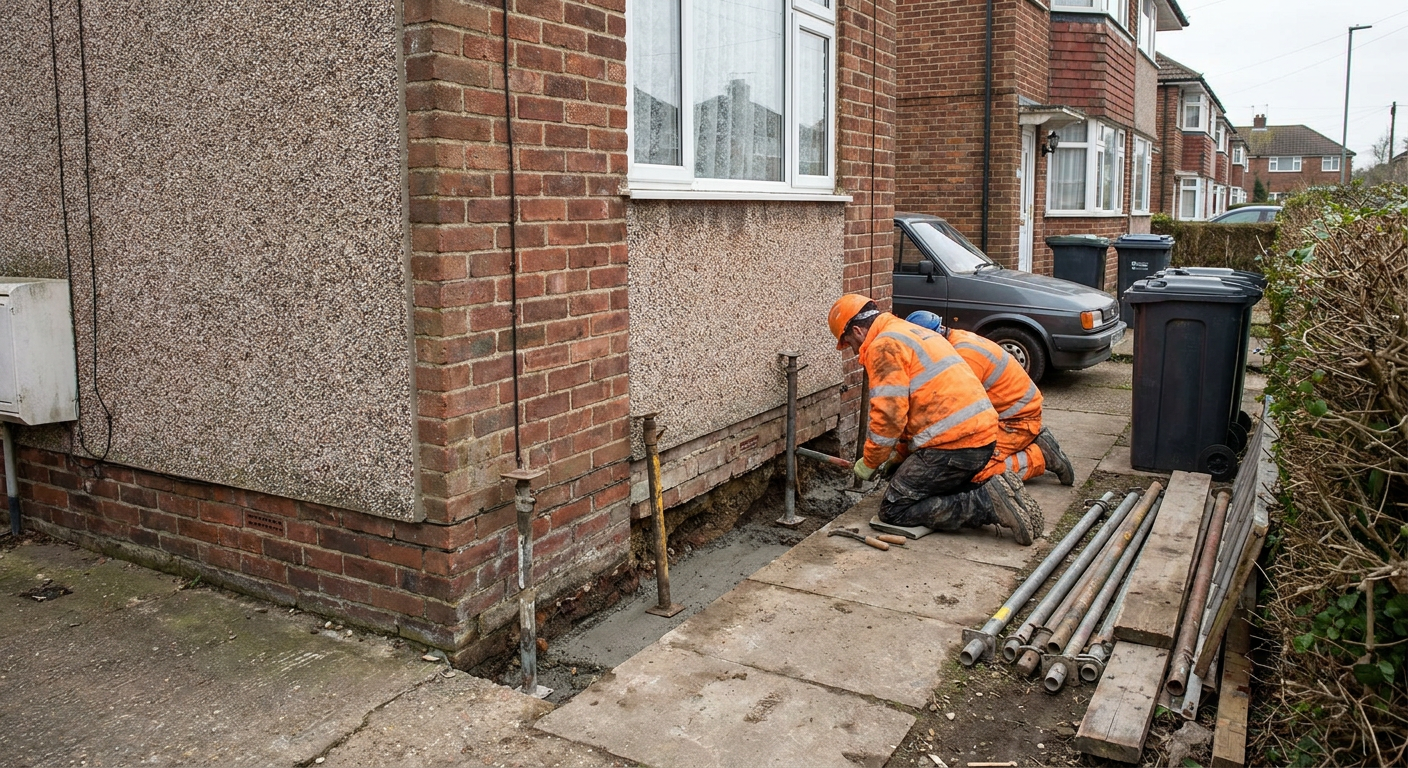
Finding the cause requires more than looking at the walls. The specialist firm carrying out the work uses several methods to check the ground, the drains and the foundations beneath your home.
-
Site inspection and recording
The specialist walks through every room and outside along each wall, measuring and mapping cracks with a crack gauge. They note where doors stick, where floors slope and how close trees stand to the foundations. This record forms the basis of the written report. If you need a crack survey for insurance purposes, these measurements give the insurer the evidence they ask for before approving any claim or repair work.
-
Trial holes and soil checks
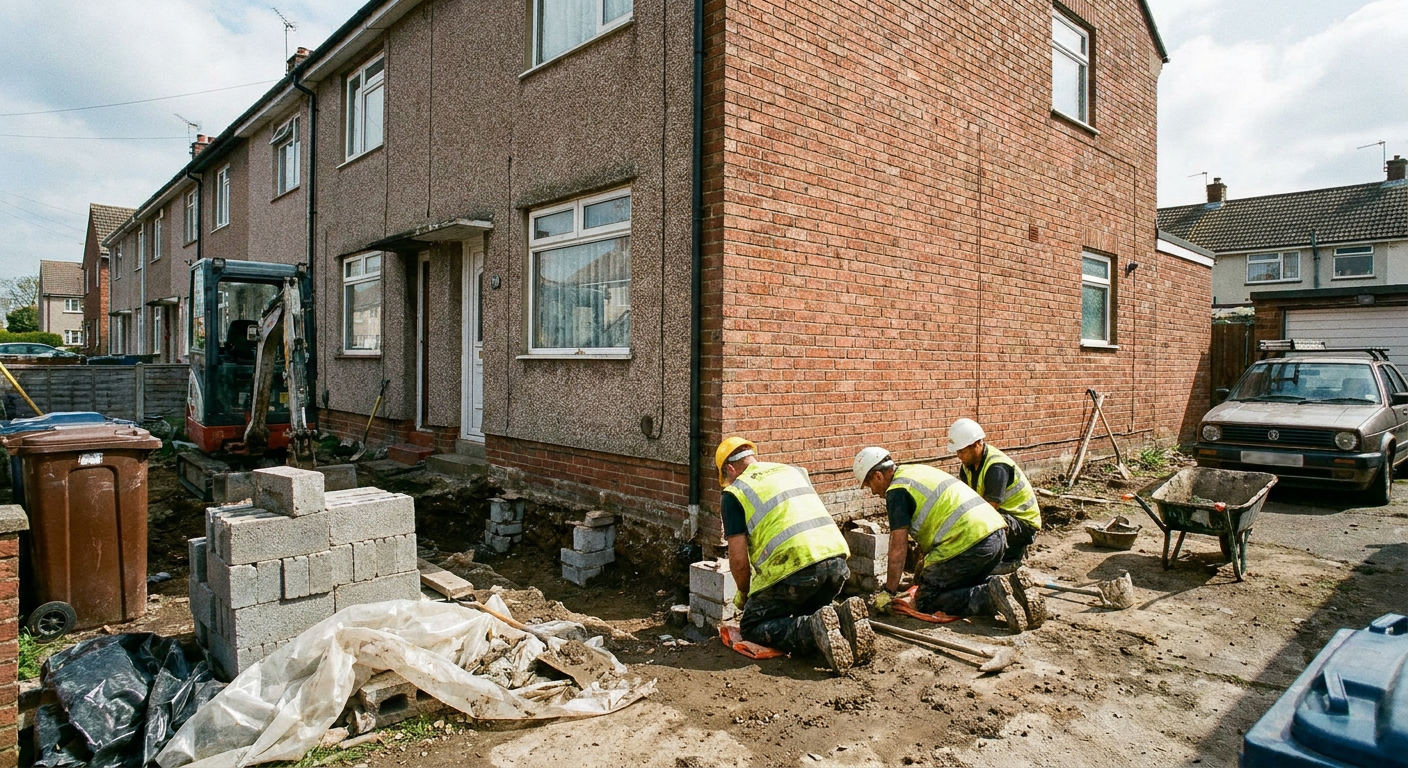
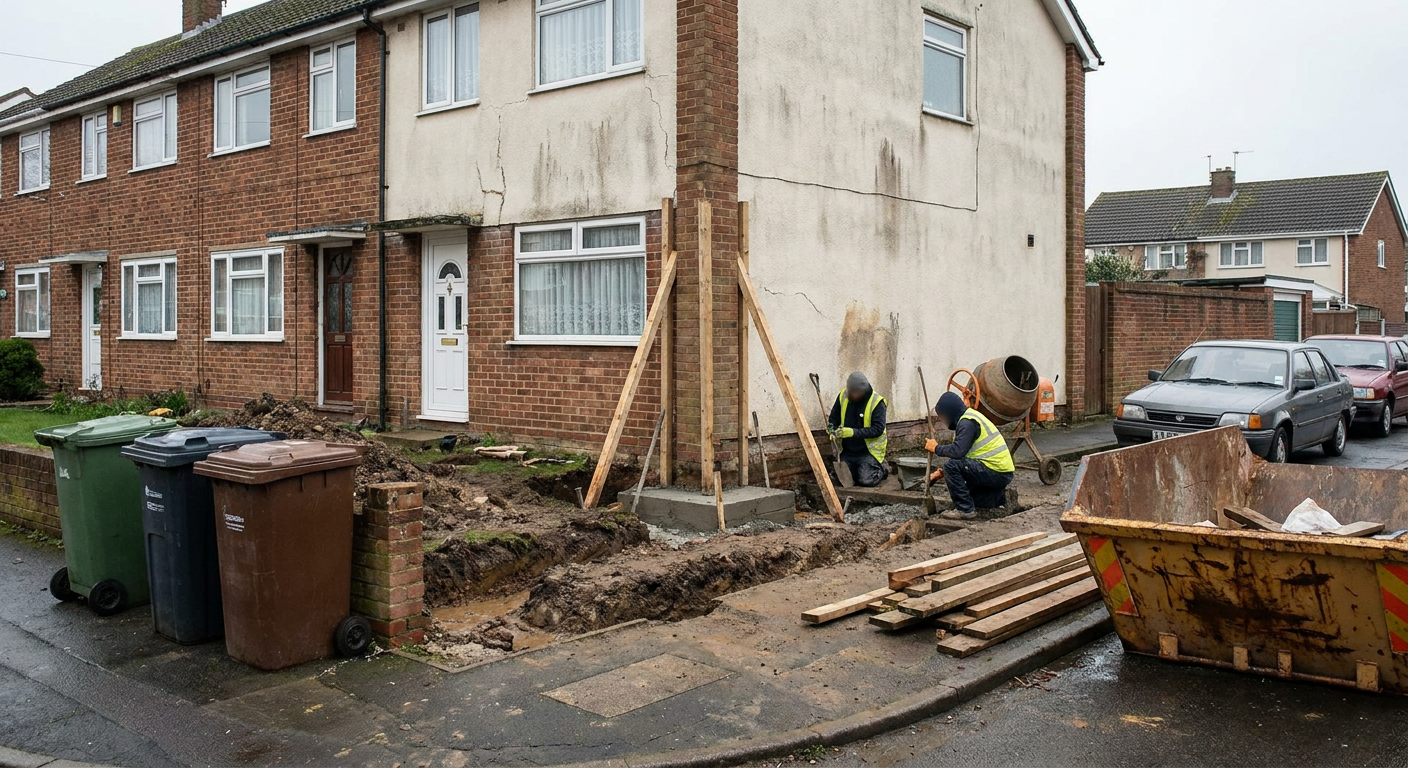
Where the surface signs suggest ground movement, the specialist digs a trial hole beside the affected wall. This exposes the existing footing so its depth and condition can be checked directly. Soil samples are taken at the same time. A soil test for house movement determines whether the clay is shrinking because of dry weather or because tree roots are drawing moisture from the ground below your home.
-
Drain testing
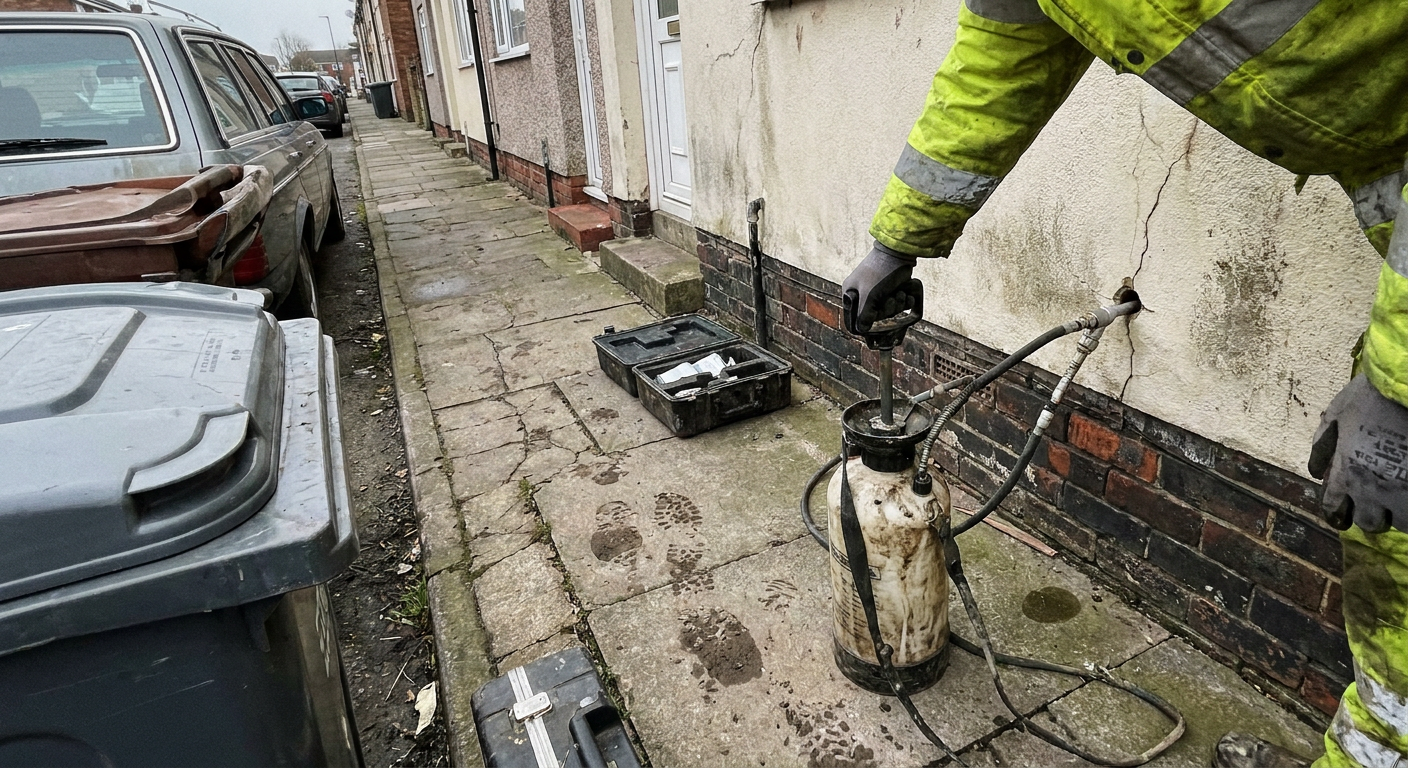
Leaking pipes wash fine particles out of the soil, leaving voids that foundations drop into. The specialist runs water through the drainage system and uses cameras to look for fractures or blocked joints. A drain survey for subsidence in Cardiff rules out plumbing faults before anyone considers expensive ground works. Fixing a broken pipe sometimes stops the movement without any need for underpinning at all.
Questions homeowners ask before booking
New cracks above my bay window: pay for a survey or claim first?
Contact your buildings insurer as soon as you notice new cracks. Most policies require you to report suspected subsidence before arranging independent investigations. The insurer will then tell you who checks subsidence in Cardiff under their claims process and whether they cover the cost.
What will the surveyor actually do when they come to the house?
They measure every crack, check door and window frames for distortion, inspect the outside walls and assess nearby trees and drains. They record all findings in a written report that explains the likely cause and recommends next steps.
Will you dig trial holes in my garden and make good the lawn?
If surface checks are not enough, the specialist digs small trial holes next to the foundations to expose the footing. Once recorded, the holes are backfilled and the turf replaced so the garden is left tidy.
Could the cracks be my drains rather than the foundations?
Yes. A fractured drain can wash soil away from beneath a wall. The specialist tests the drainage system with flow checks and cameras to rule this out before recommending any foundation work.
How long before I get the written findings for my insurer?
Most specialist firms issue the report within two to three weeks of the site visit. You can send it directly to your insurer to support a claim or use it to decide on repairs yourself.
Is it the clay soil or the tree at the front causing this?
Both can contribute. Cardiff sits on varied geology, including reactive clay that shrinks in dry spells. Tree roots extract moisture from that clay, accelerating the shrinkage. The report identifies which factor is dominant.
What does a subsidence survey cost and is it refunded?
Fees vary depending on the size of the home and the tests required. Some specialist firms deduct the survey cost if you proceed with the recommended repair work, but this depends on the firm you instruct.
If the report says monitoring, how long until it is fixed?
Monitoring usually runs for six to twelve months. Gauges track whether the crack is still moving. Once the data shows the pattern, the specialist recommends the right repair method rather than guessing early.
Areas covered around Cardiff
Specialist firms take on subsidence investigations across the city and its surrounding towns. Whether your home is near the bay or further inland, the same detailed checks apply to every property they visit.
If your town is not listed, send an enquiry to check availability.
Tell us about the cracks you have found
Send a description of what you have noticed and where it is. A specialist firm will review the details and contact you to discuss the next steps. Submitting this form does not commit you to any work or payment.
- No obligation to proceed
- Free initial review
- Local specialists only