Cardiff homebuyers
House survey says subsidence: what next?
Find out what the crack means and whether the ground beneath your home is moving. Send an enquiry about the property and get clarity without any cost or commitment to proceed.
When a house survey says subsidence, what happens next
What further investigation actually means
A homebuyer report recommends further investigation when the surveyor spots something outside their standard remit. They might have seen diagonal cracking near a window frame, doors that stick without an obvious reason, or gaps opening between skirting boards and the floor. The valuer is not diagnosing a fault. They are saying they cannot confirm the building is sound without someone who specialises in ground movement taking a closer look.
This note does not mean the house is falling down. It means the purchase should pause until a specialist firm examines the foundations and the soil beneath them. In Cardiff, where Victorian terraces sit on different geology than newer estates near the bay, the cause could be anything from clay shrinkage to a leaking drain washing soil away. A [subsidence survey](/methods/subsidence-survey-cardiff) looks at the walls, the ground and the drainage to find out which one it is.
What a structural survey adds beyond the standard report
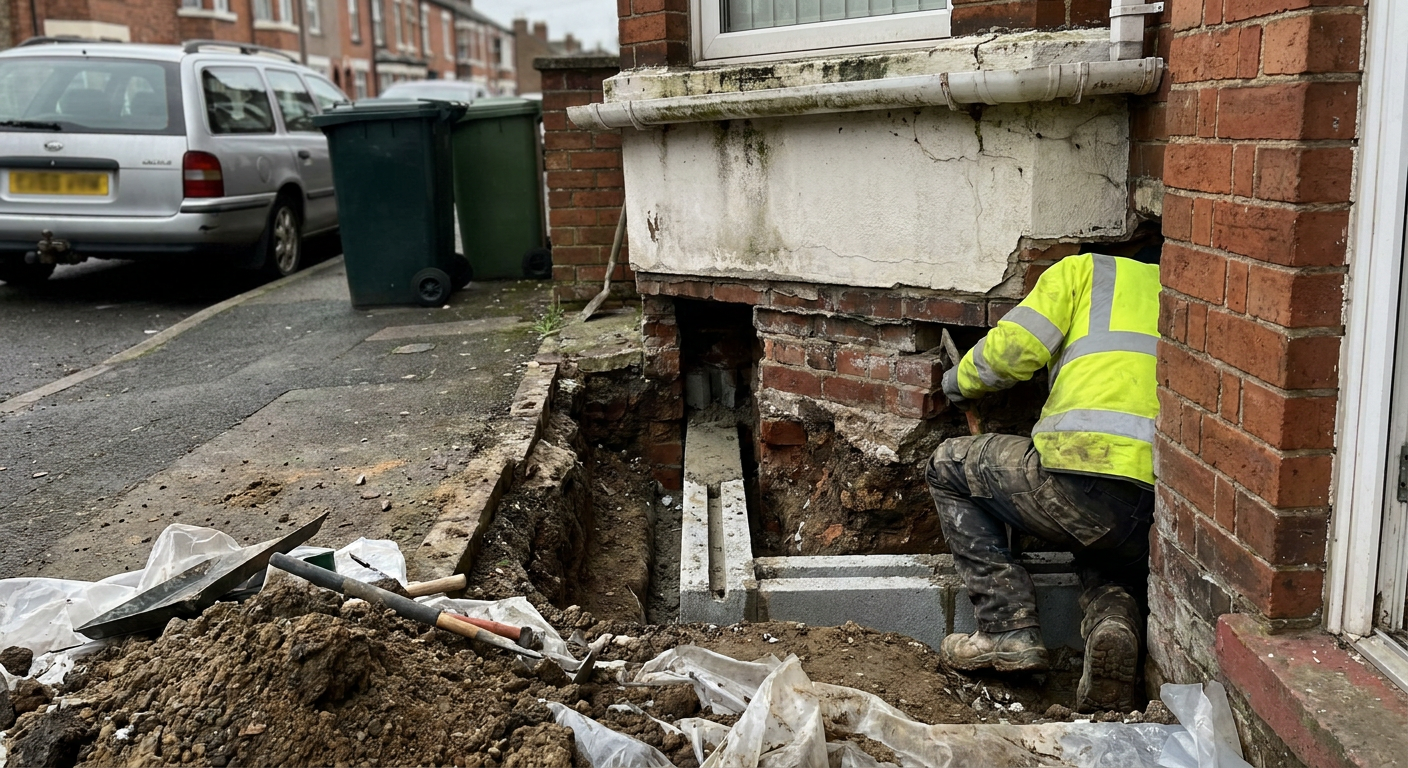
A standard valuation checks if the house is worth the asking price. A structural survey of a Cardiff house goes further. The specialist firm digs trial holes beside the foundation, measures how far the wall has moved, and records the type of soil underneath. They check drains for leaks, measure the distance to nearby trees, and map every crack to see if the pattern points to settlement or active subsidence.
The resulting report states whether the movement is ongoing or happened years ago and stopped. That distinction changes everything. If the ground is still shifting, the buyer needs to know what fixing it involves, whether that requires [mass concrete underpinning](/methods/mass-concrete-underpinning-cardiff) or something less invasive like [resin injection](/methods/resin-injection-cardiff). The report gives both parties facts instead of assumptions, so decisions about the sale rest on evidence rather than worry.
How findings change the price and the mortgage offer
If a structural survey confirms active movement, the buyer has grounds to ask for a lower price. The estimated cost of the repair becomes the basis for renegotiating price after survey. A buyer can ask the seller to drop the asking price by that amount or request the work is finished before contracts exchange. Neither side is forced to agree. The figures in the report give both a starting point. Lenders react cautiously to these findings. A mortgage refused subsidence decision usually happens because the bank wants proof the ground is stable before releasing funds. Some will lend if a specialist installs [crack monitoring](/methods/structural-monitoring-cardiff) equipment and tracks the wall for several months to prove the movement has stopped. Others require the [foundation repair](/methods/foundation-repair-cardiff) to be finished and signed off by building control first.
Insurance, disclosure and reading a historic movement report
Buildings insurance for a house with past subsidence is available, though premiums may be higher and the excess for ground-related claims will likely increase. Insurers want to see the paperwork. A seller must disclose known structural issues during the conveyancing process, including any past insurance claims for subsidence or completed underpinning. Hiding this leaves the seller open to legal action after completion.
Selling a house with cracks becomes simpler when the documentation is complete. Buyers often ask if a historic movement stable report is safe to accept. If a specialist firm monitored the property and confirmed no further shift over twelve months or more, the risk is low. But the buyer should read the exact wording. A note saying movement appears historical carries less weight than measured data showing zero change across multiple readings. Keeping all [underpinning paperwork and certificates](/updates/underpinning-paperwork-certificates-to-keep-on-file) on file makes this easier for everyone involved in the sale.
Signs the homebuyer report flagged at your home
The surveyor noted something because the walls or floors showed signs of movement. These are the physical marks that prompt the recommendation for further investigation around Cardiff homes.
- 1
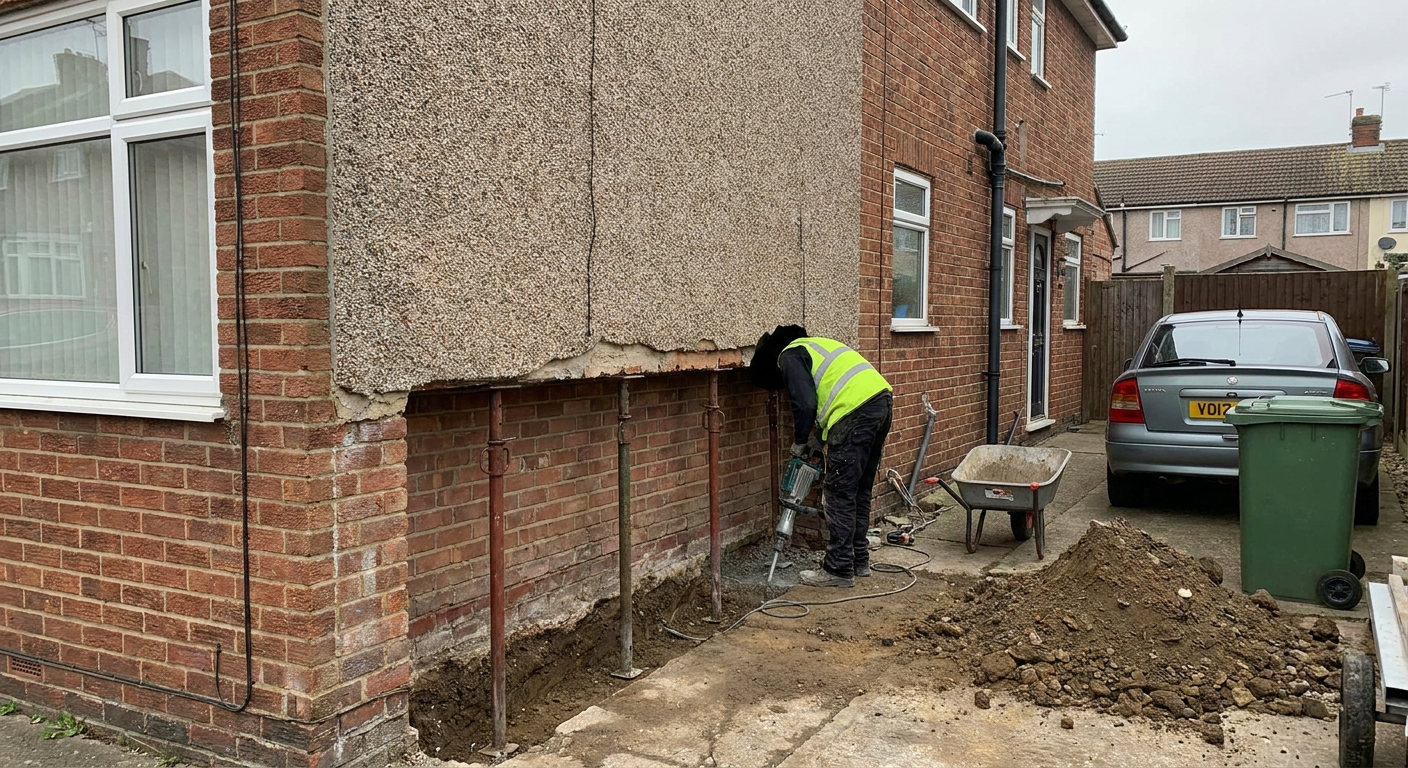
Diagonal cracks in brickwork
Cracks wider at the top than the bottom, often near windows or doors, suggesting the wall has tilted as the ground shifted.
- 2
Doors sticking in their frames
Frames distort when walls move. A door that jams without swelling from damp may indicate the structure has dropped slightly.
- 3
Gaps at the skirting board
Floors settle independently of walls. A widening gap between timber and plaster shows relative movement between the two.
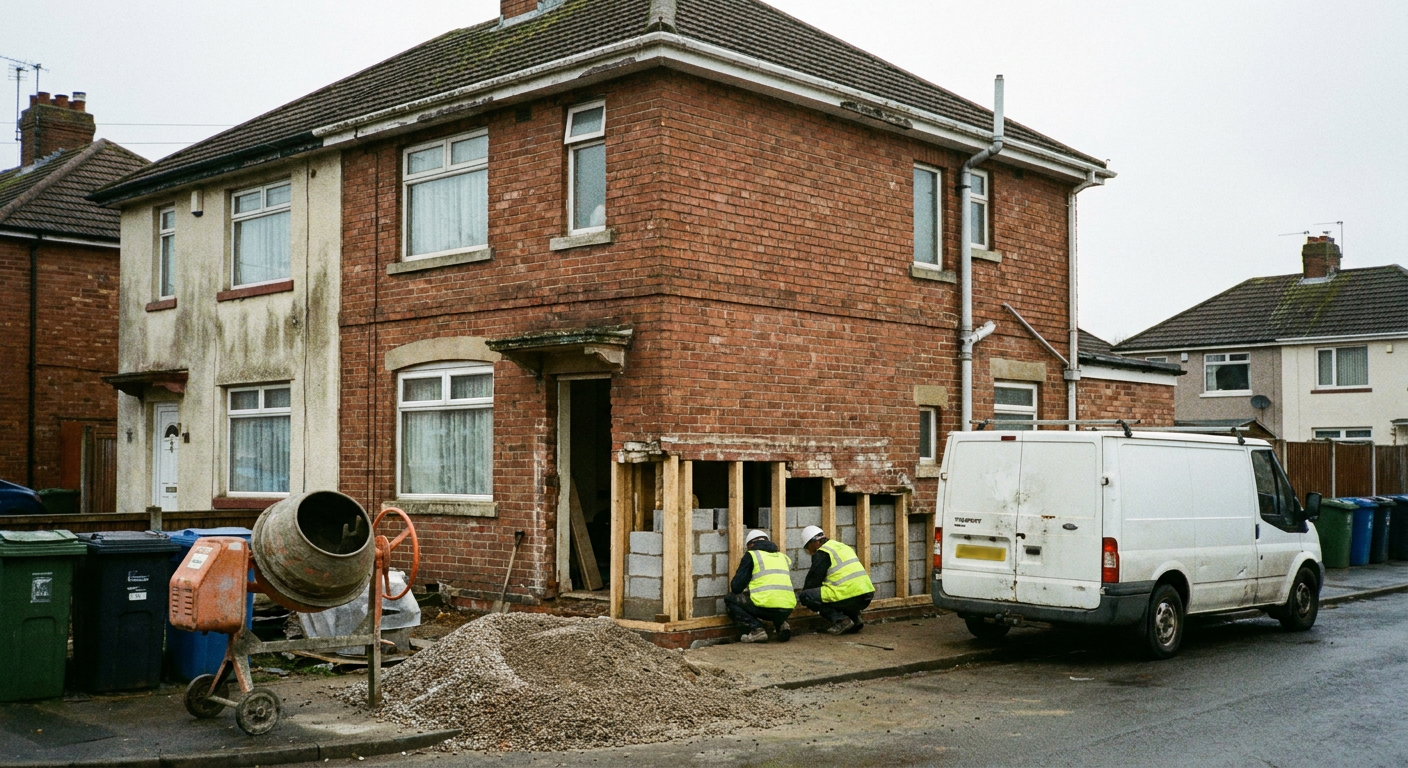
- 4
Cracks reopening after filling
Decorators fill hairline cracks routinely. When filler splits again within months, the wall behind it is probably still moving.
Questions buyers and sellers ask in Cardiff
- Will the delay hold up the purchase?
- Extra investigation typically adds four to eight weeks. Trial holes, lab tests and the written report take time, and monitoring extends this further.
- Can I get buildings insurance?
- Specialist insurers cover homes with past movement. Expect a higher excess for subsidence claims and provide the structural report when applying.
- What must a seller disclose?
- Sellers must declare known structural defects and past insurance claims for ground movement on the property information form during conveyancing.
- Is historic movement safe to accept?
- Measured data showing no change over twelve months or more offers real reassurance. Vague wording without monitoring figures warrants caution.
- Will the lender withdraw the mortgage?
- A mortgage lender assesses risk before releasing funds. If a surveyor flags subsidence, the lender may halt the application until a structural engineer confirms the ground is stable or specifies the repair needed.
Ask about the subsidence note on your report
Send the details from the homebuyer report and receive guidance on what the findings mean for the sale. There is no charge and no obligation to proceed with any repair work.
- No fee for advice
- No obligation to buy
- Local ground knowledge