Cardiff drainage
Can a leaking drain cause subsidence under a wall?
Describe the crack or damp patch you have noticed at home. A specialist firm will review what you send and advise on the next step, with no cost or obligation to you.
How water from a broken pipe moves soil
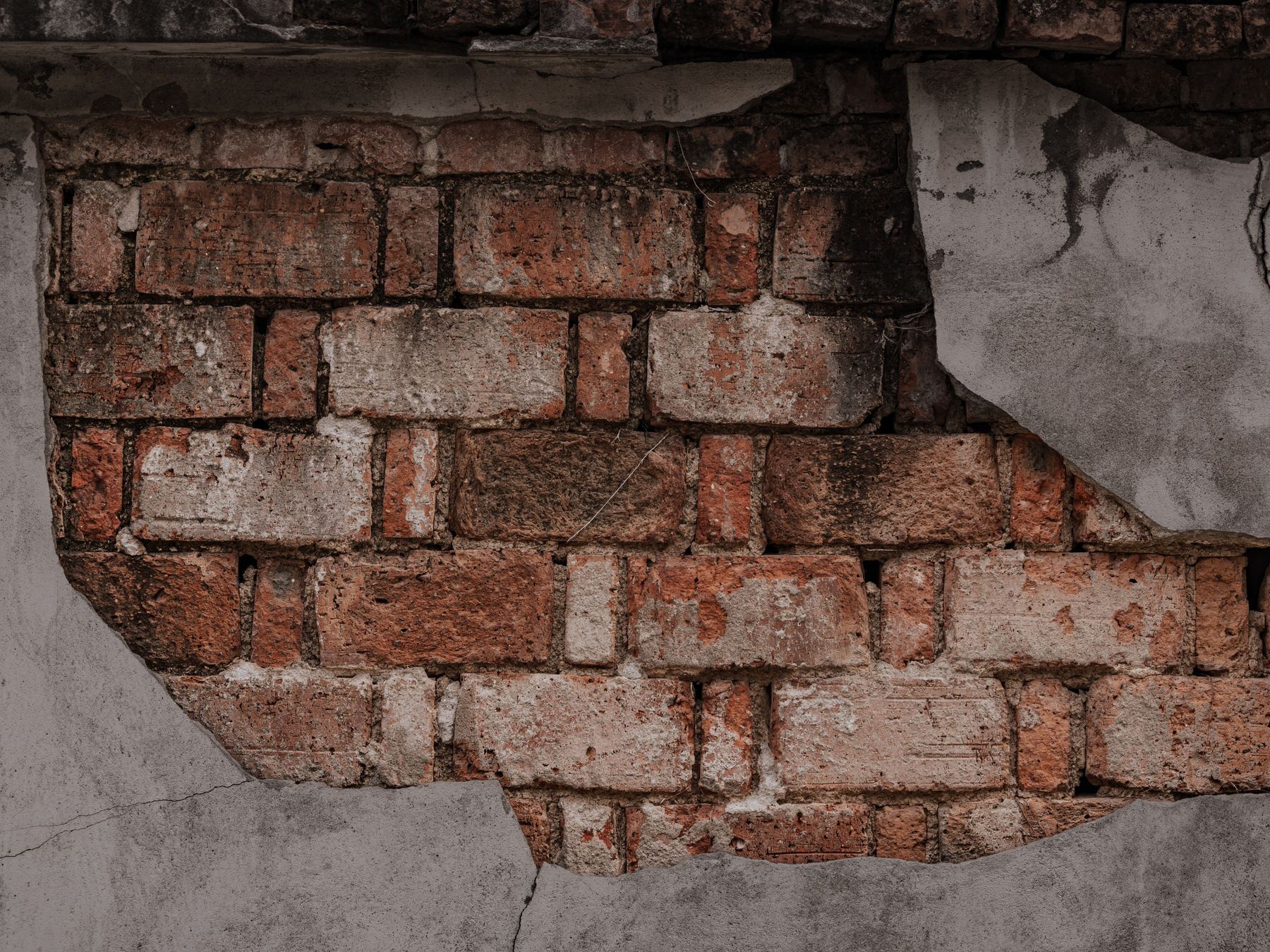
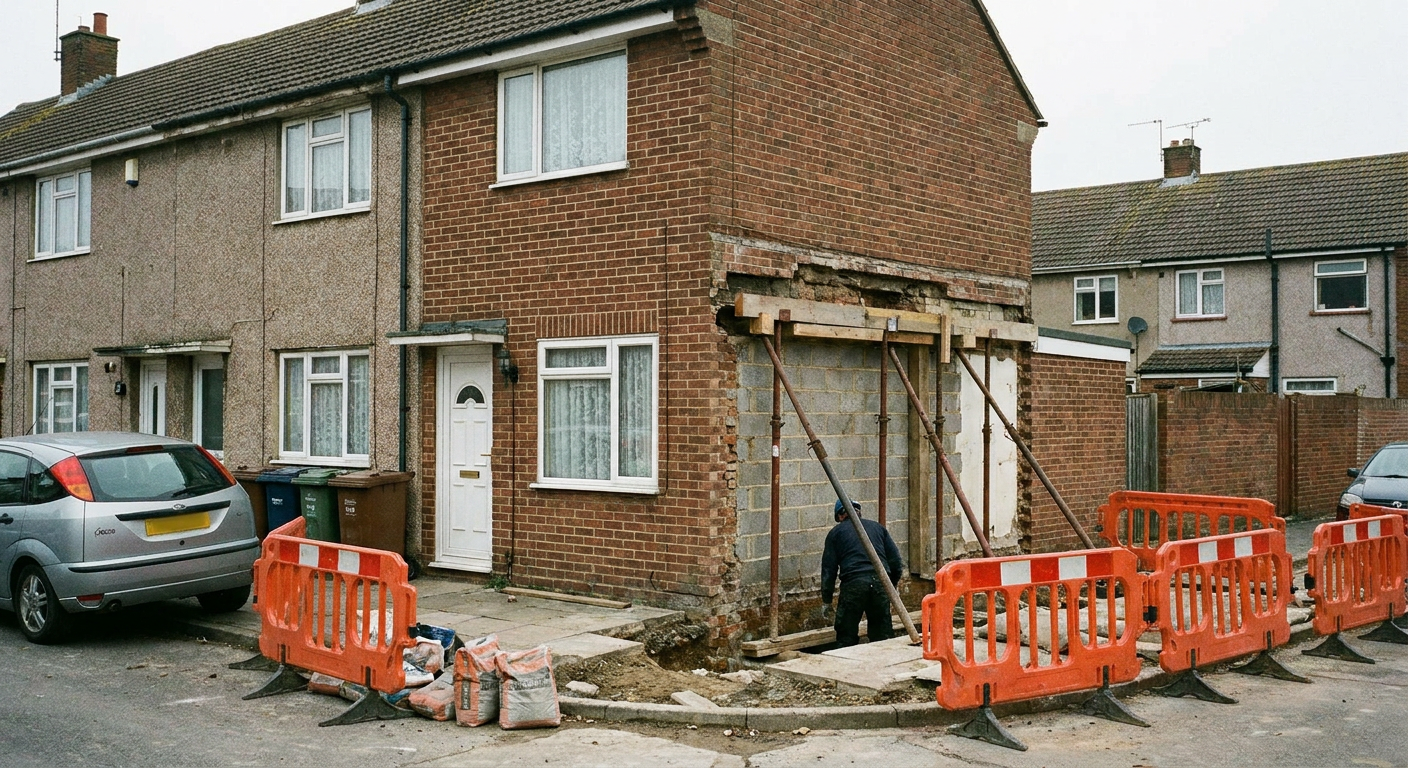
A leaking drain can cause subsidence because running water carries fine soil particles away from beneath the footings. Over months, this leaves a void where solid ground used to be. The wall above then settles into that empty space, and cracks open in the plaster or brickwork.
In Cardiff, many older streets sit on made ground or river gravels that wash out faster than heavy clay. A broken drain under foundations here does not need to be large to shift enough material to move a wall. Even a slow drip from a cracked joint will erode the subsoil if it goes unnoticed through winter.
This is why drainage causing wall cracks is one of the first things a [subsidence survey](/methods/subsidence-survey-cardiff) looks for. Before anyone considers [mass concrete underpinning](/methods/mass-concrete-underpinning-cardiff) or [resin injection](/methods/resin-injection-cardiff), the leak itself has to be found and stopped. Stabilising the ground only works once the water source is gone.
Signs that point to a drain rather than a tree
Tree roots and shrinking clay both cause movement, but they leave different marks. Subsidence linked to trees tends to follow dry summers and affects the side of the house nearest the trunk. Drainage problems show up differently.
Look for cracks that appear suddenly after heavy rain, rather than opening slowly over a hot season. A smell of sewage near the base of the wall, or moss growing on bricks that should stay dry, suggests water is escaping underground. Inside, doors may stick on the side of the house where the drain runs, while the rest of the frame stays square.
A [crack monitoring](/methods/structural-monitoring-cardiff) gauge fixed across the fracture will record whether movement happens in wet weather. If the crack widens after storms and holds still during dry spells, washed out ground footings are more likely than seasonal clay shrinkage. That pattern tells a structural specialist where to look first.
CCTV surveys and water tests for leaking drains
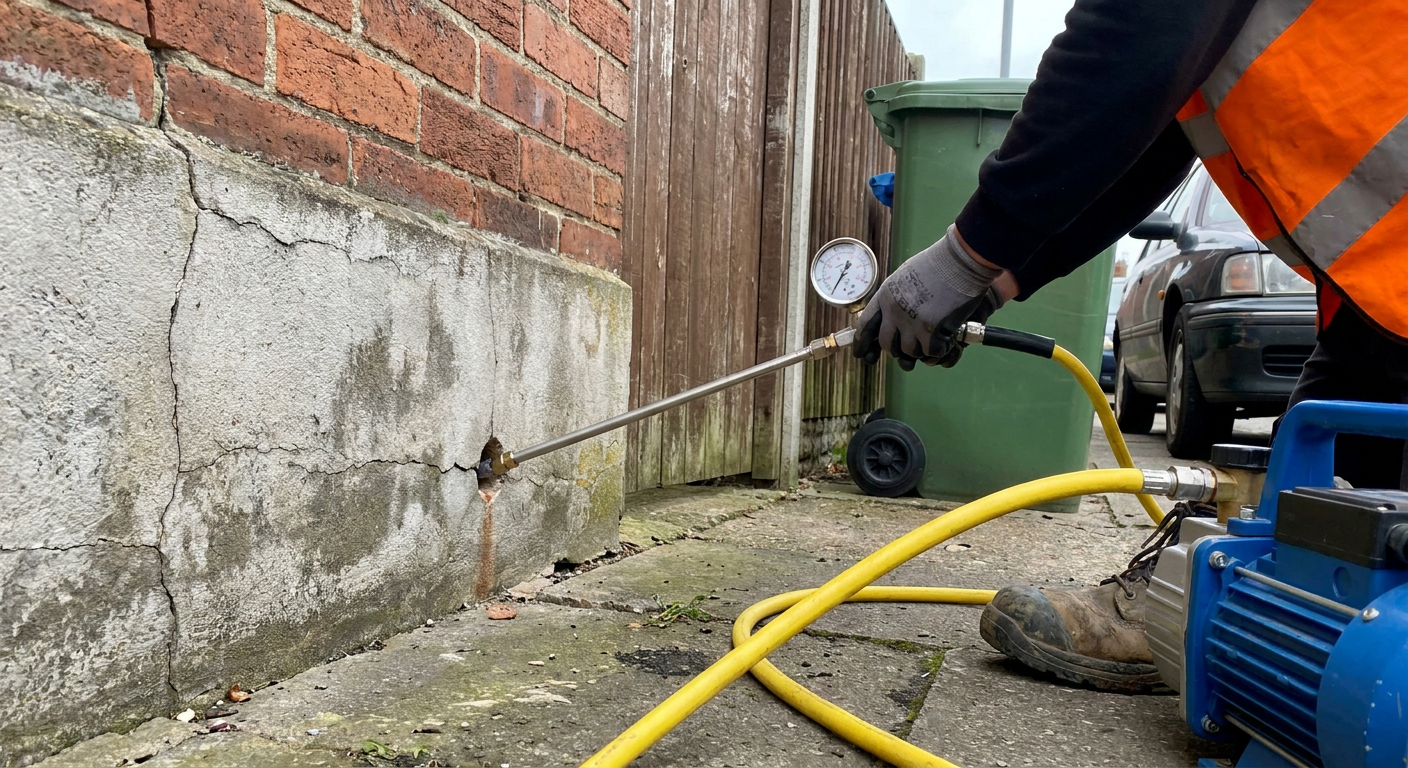
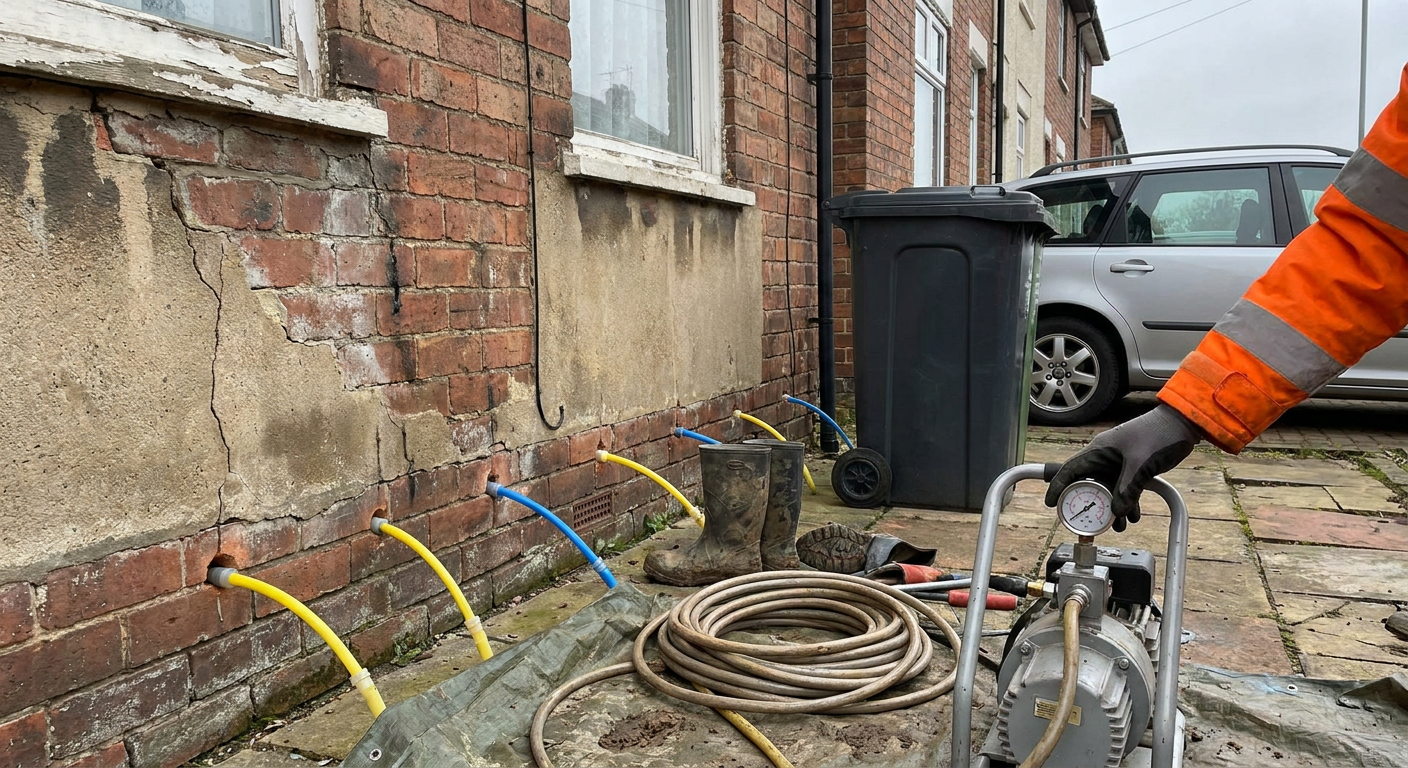
To confirm a leak, a drainage contractor will run a CCTV drain survey. In Cardiff, this usually means feeding a small camera along the pipe from an access point outside. The footage shows cracks, collapsed sections, root intrusion or displaced joints. Most residential surveys take between one and two hours, depending on how far the run goes and how many bends the camera must pass.
The camera sees damage, but it cannot always prove water is escaping right now. So the contractor may also carry out a water test. They block one end of the pipe, fill it, and measure whether the level drops over a set time. A falling level confirms a leak even when the pipe looks intact on screen.
Both tests are standard before any [foundation repair](/methods/foundation-repair-cardiff) begins. Without them, a [mini piled underpinning](/methods/mini-piled-underpinning-cardiff) scheme might go ahead while the real problem continues to wash soil away underneath the new piles.
Who pays for the repair in Wales
Responsibility depends on where the pipe sits and who else uses it. Under shared drain responsibility rules in Wales, a pipe that serves only your home and lies within your boundary is yours to maintain. But if that same pipe carries waste from a neighbour, or crosses the public highway, Dwr Cymru Welsh Water takes ownership.
This matters because the repair method changes with the owner. A private drain can be dug up or relined by a contractor you appoint. A public sewer needs the water company to approve the work first, which adds time. Delays matter when ground is actively washing away.
If you live in a terraced house, the drain almost certainly runs under several properties. Check the title plan or ask Dwr Cymru for a sewer map before commissioning work. Getting the ownership wrong means paying for a repair that was never your bill to settle.
Will fixing the drain stop the cracks moving
Stopping the leak removes the cause, but the void left behind does not always fill itself. Fine sand and gravel may have washed into the public sewer and cannot flow back. So the ground remains weak even after the pipe is sound.
A structural engineer will usually recommend a period of observation once the drain is repaired. Gauges track whether the wall settles further. If movement stops within a few months, [crack repair](/methods/crack-repair-cardiff) alone may be enough to restore the finish inside.
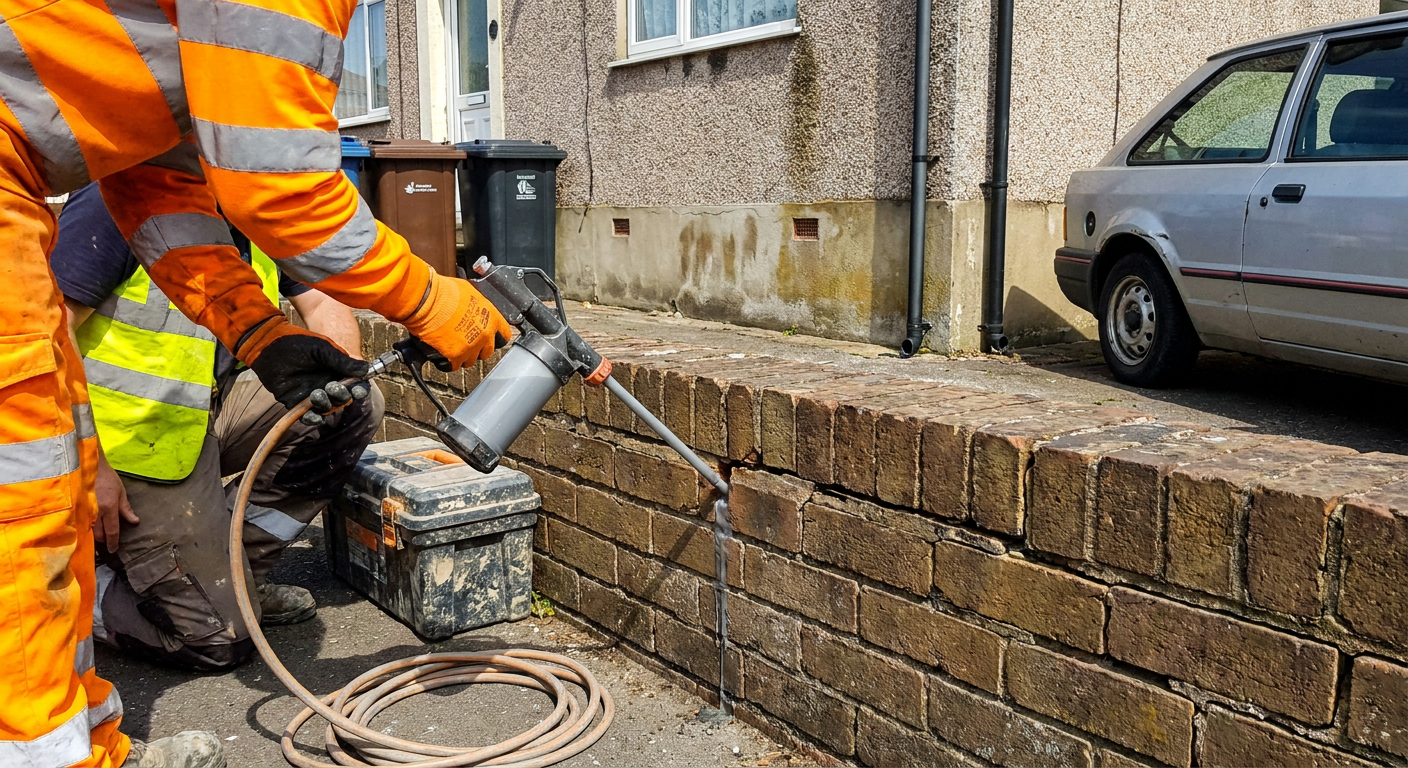
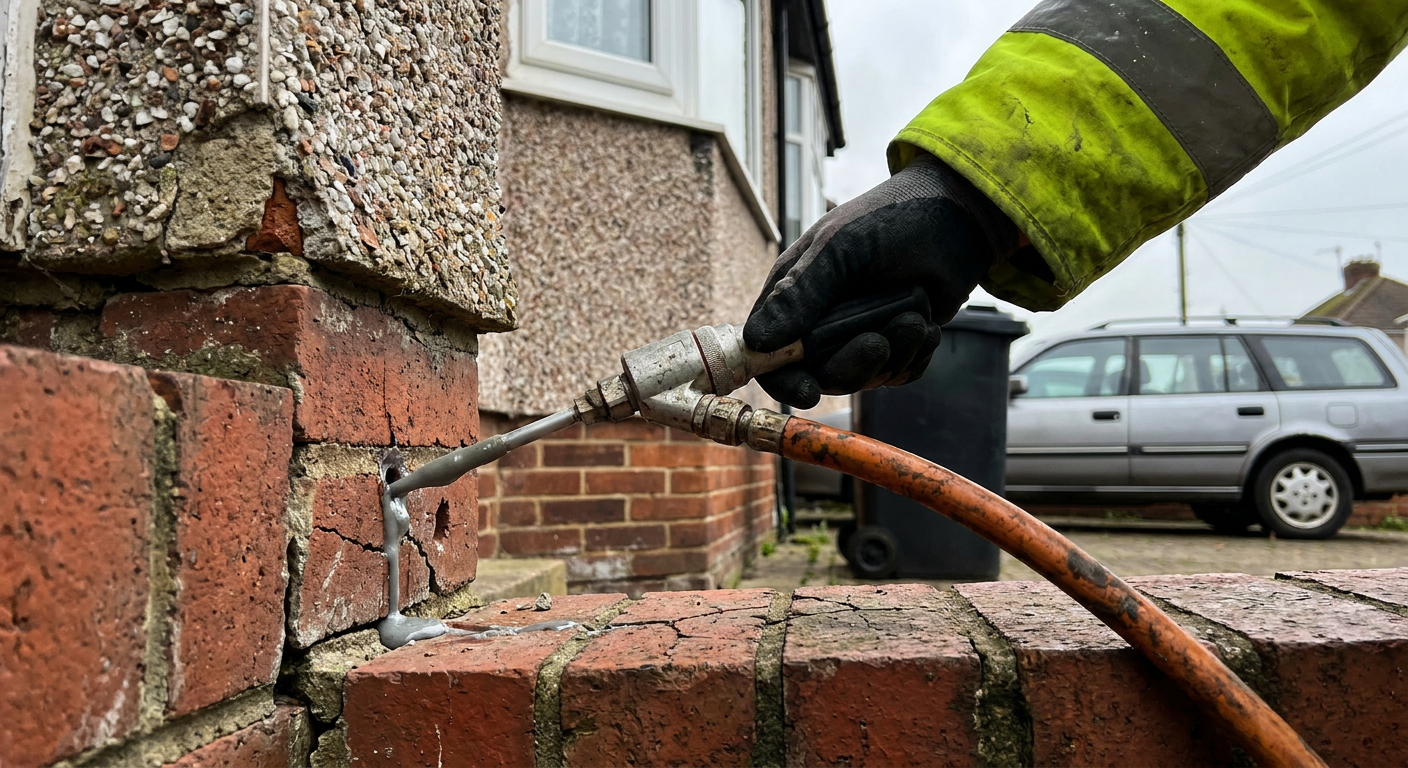
If the wall keeps dropping, the lost support needs replacing. That might mean [basement underpinning](/methods/basement-underpinning-cardiff) if the house has a cellar, or targeted grouting to fill the void without full excavation. The decision rests on how much ground was lost and how heavily the wall loads the footing. Monitoring data makes that call straightforward rather than guesswork.
What a leaking drain looks like around your home
Water escaping underground does not always pool visibly. It takes soil with it, and the building above reacts. These are the physical changes people notice first.
- 1
Sinking path near wall
Paving slabs tilt toward the house or drop below the damp course line, suggesting the ground underneath has been carried away by flowing water.
- 2
Cracks wider at the bottom
Fractures in brickwork that taper as they rise often sit directly above a failing pipe run, where the footing has dropped locally.
- 3
Damp skirting boards
Internal walls stay wet near the floor even in dry weather, which can mean water is collecting against the foundation from a broken joint.
- 4
Foul smell outside
A persistent sewage odour near the base of an external wall points to wastewater escaping into the surrounding soil rather than flowing to the main sewer.
Questions about drains and subsidence in Cardiff
These come up regularly when homeowners suspect a leak is moving their walls.
- Could a cracked drain wash out ground?
- Yes. A broken drain under foundations allows pressurised water to carry soil particles into the pipe, leaving voids beneath the footings.
- Is a soggy patch a warning sign?
- A permanently wet area or sinking path near wall bases often indicates water pooling where a joint has failed underground.
- Do insurers check drains first?
- Most buildings insurers require a drainage survey before approving structural claims, since leaks are cheaper to fix than underpinning.
- Do I need a water test too?
- A camera shows damage, but a water test proves whether liquid is actively escaping. Both together give a complete picture.
- Will cracks stop after the repair?
- They may stabilise, but the lost ground does not return. Monitoring tells a specialist whether further support is needed.
Tell us what you have noticed at home
Send details of the crack, damp patch or sinking ground. A specialist firm reviews the information and advises on next steps. There is no fee and no commitment to proceed.
- No charge to ask
- No obligation to proceed
- Local specialists respond