North Cardiff ground
Limestone and swallow holes in north Cardiff gardens
Send details of the hollow or crack you have noticed at home. A specialist firm will read what you describe and tell you if it needs attention, with no charge for that first look.
Why limestone matters under north Cardiff homes
Parts of north Cardiff sit on carboniferous limestone. Over thousands of years, slightly acidic rainwater has dissolved channels through the rock below streets in areas like Rhiwbina, Whitchurch and Lisvane. Where those channels widen, the ground can collapse into them.
A collapse does not always happen all at once. Soil filters down slowly into voids beneath the surface, leaving the garden looking normal while the support underneath disappears. When enough material has gone, the ground drops. If that drop happens near a house wall, the footing loses its bearing.
This is different from the shrinkage you see in clay soil, where dry summers pull moisture out and the ground contracts. Limestone dissolution happens regardless of the weather. It depends entirely on water moving through the rock over long periods. Because of that, the signs in your home might appear gradually, or they might follow heavy rain that washes loose soil into an existing cavity.
Understanding what sits beneath your garden is the first step. The bedrock in north Cardiff is mapped, but the exact location of a void is not something you can guess from the surface.
Signs a swallow hole is affecting your foundations
The most obvious sign is a depression in the lawn or flowerbed. It might look like a shallow dish, or it could be a sudden hole that opens after a storm. Sometimes the grass stays intact while the earth beneath it sinks, creating a soft patch that gives way when you step on it.
Inside the home, watch for cracks that do not behave like seasonal movement. A crack caused by a void opening below the footing tends to widen steadily rather than closing up again in winter. Doors may start to stick because the frame has twisted. Floors slope toward one wall.
You might also notice gaps opening between skirting boards and the floor, or plaster cracking along a diagonal line from a window corner. These are symptoms of differential settlement, where one part of the wall drops while the rest stays put.
If you spot any of these, track the movement before assuming the worst. A specialist firm can set up crack monitoring to measure whether the gap is still growing. That data tells them whether the ground has finished moving or the void is still active.
How a subsidence survey finds the void
Guessing where the hollow lies rarely works. A specialist surveyor uses ground-penetrating radar or trial pits to map what is happening beneath the surface. They check the depth of the footings, the condition of the subsoil and whether water is washing material away.
The survey also rules out other causes. A leaking drain can erode soil in a way that mimics a swallow hole. Tree roots draw moisture from the ground and cause localised sinking. Both problems need different fixes, so identifying the real cause prevents wasted work.
Once the survey confirms a void, the report sets out how far it extends and which walls are affected. That information shapes everything that follows. Without it, any repair is just filling a symptom rather than addressing the loss of support.
The cost of underpinning depends heavily on what the survey finds. A small void under one corner of a house costs less to stabilise than a network of channels running beneath a whole wall. Getting the picture right early stops unnecessary excavation.
Repair methods suited to limestone ground
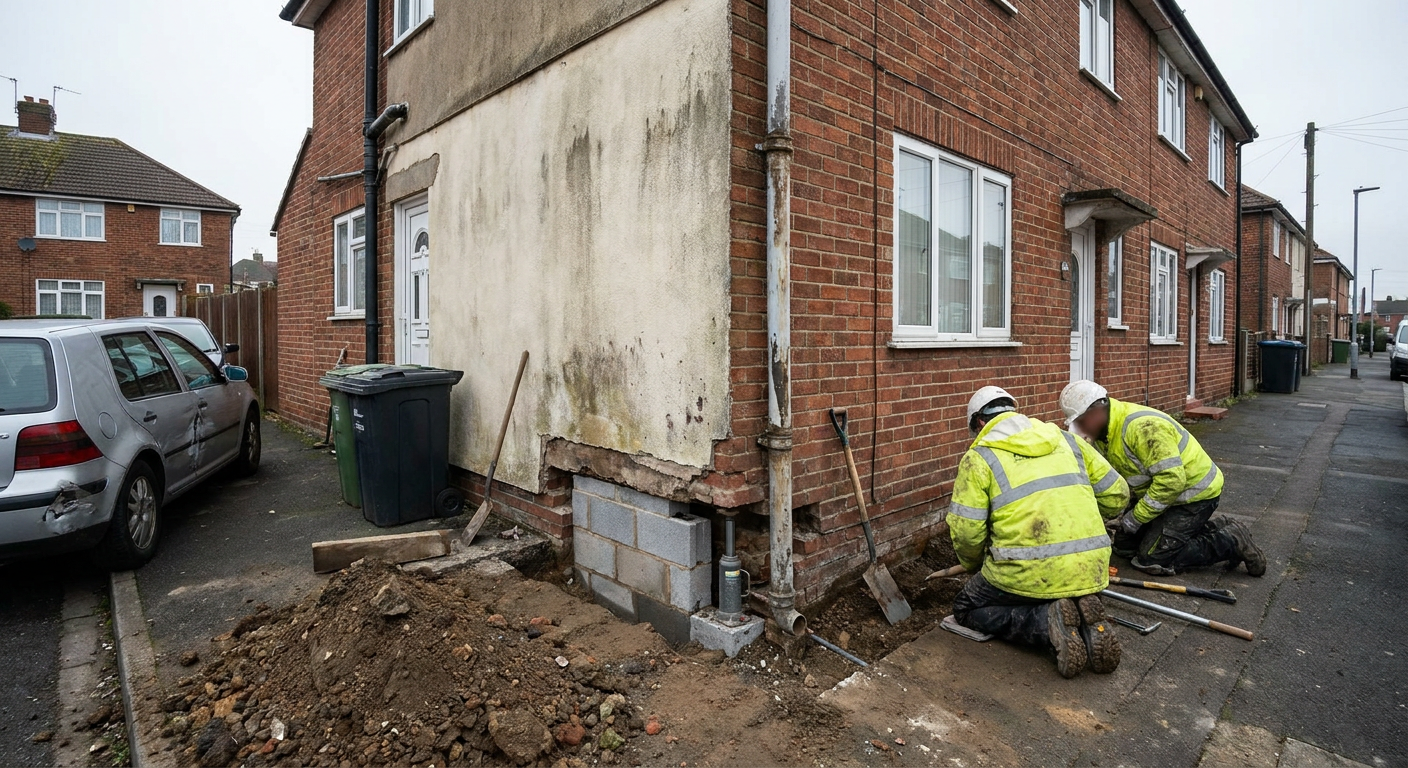
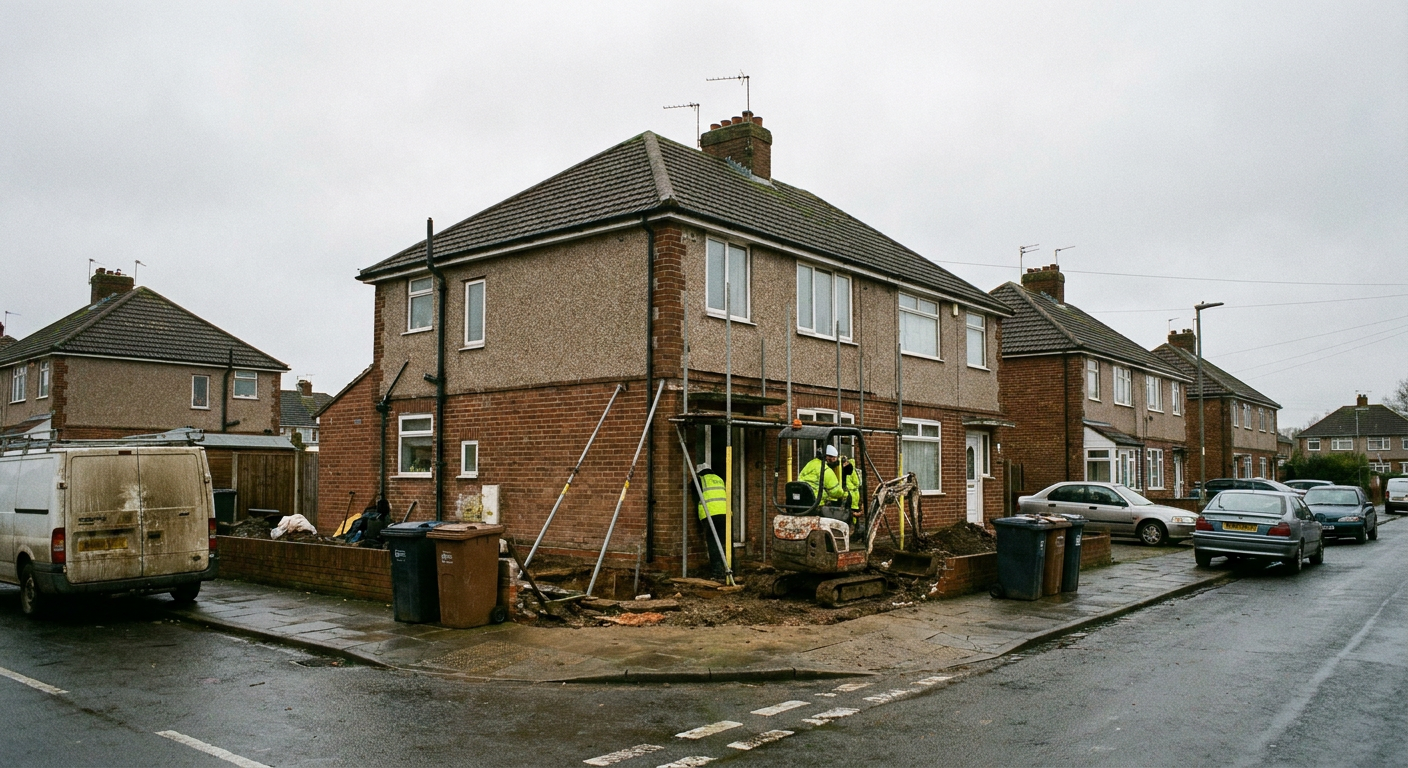
Standard mass concrete underpinning involves digging sections beneath the existing footing and pouring new concrete to reach stable ground. On limestone, the question is how deep stable ground actually is. If the void is shallow, mass concrete works well. The specialist excavates in controlled bays, pours the concrete and pins it to the old foundation.
When the cavities run deeper, mini piled underpinning becomes the better choice. Steel-cased piles are driven or bored through the unstable zone until they seat in solid rock. A reinforced concrete beam then transfers the load of the wall onto those piles, bypassing the hollow ground entirely.
Resin injection is sometimes used where access is tight or the void is small. A specialist pumps expanding resin into the ground to fill gaps and compact loose soil. It does not replace deep piling where the rock itself has dissolved, but it can stabilise shallow washouts quickly.
The right method depends on the survey findings, the age of the house and how much movement has already happened. A specialist contractor will recommend the approach that reaches competent bearing strata without doing more work than the problem demands.
What to do if you suspect ground collapse at home
Do not try to fill a suspected swallow hole yourself. Pouring concrete or rubble into a depression can block drainage paths and force water into new channels, making the problem worse. It also destroys evidence a surveyor needs to read the ground.
Mark the edges of any depression with pegs so you can tell if it grows. Take photographs with something for scale, like a tape measure laid across the widest point. Inside, note which doors stick and where cracks appear.
Then describe what you have found. A specialist firm will review the details and advise whether the situation needs urgent attention or scheduled monitoring. Subsidence caused by limestone voids does not usually resolve on its own, so acting early limits the damage to the structure above.
Keep records of everything. If you later make a buildings insurance claim, the insurer will want proof of when the problem started and what steps were taken. Clear notes and dated photographs help establish that timeline.
Tell us what you have noticed in your garden
Write down what you see. A specialist firm will read your description and advise on the next step. Sending an enquiry does not commit you to any work or cost.
- No obligation to proceed
- Free initial assessment
- Local specialists respond