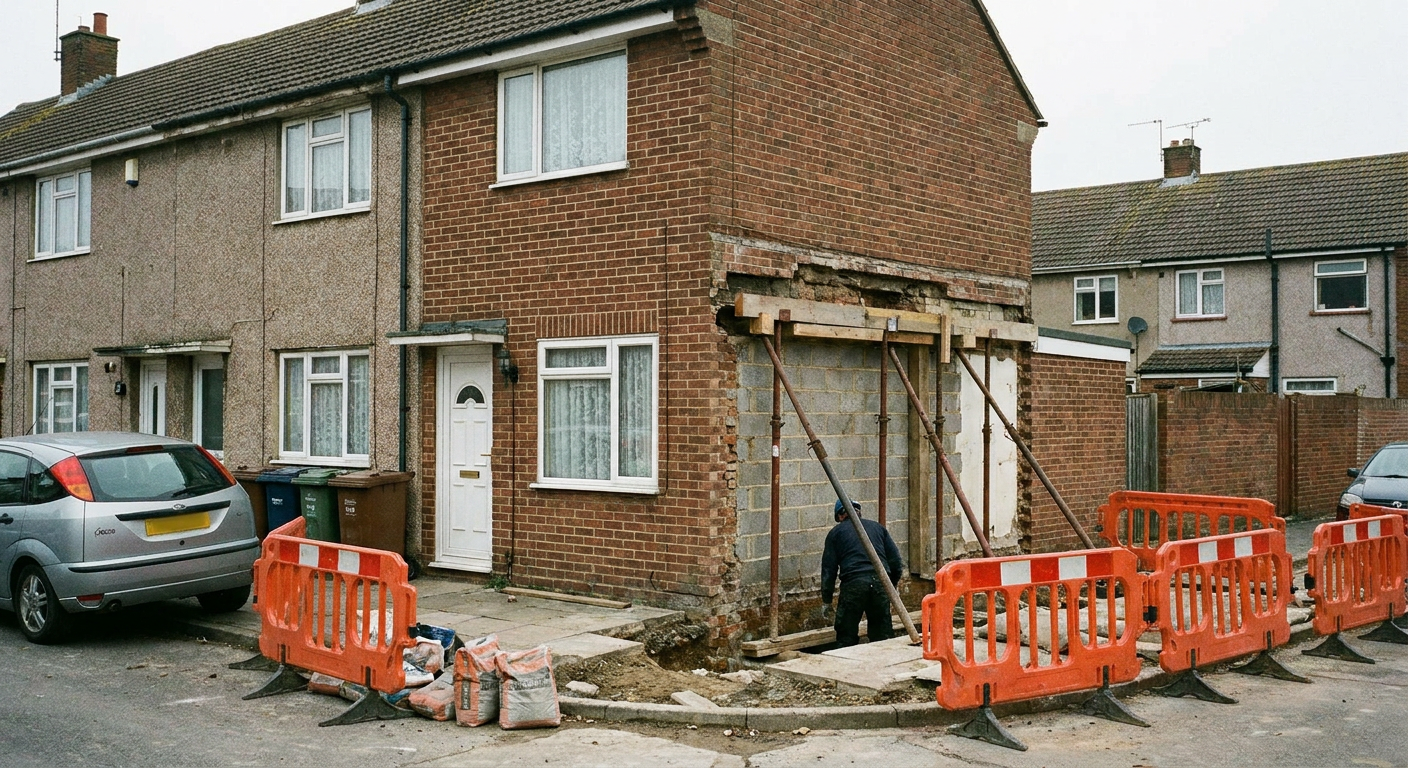
Cardiff foundations
How deep does underpinning go beneath a house wall?
Find out what the ground below your home requires before any work begins. Send an enquiry about your wall and a specialist firm will assess the depth needed, at no cost to you.
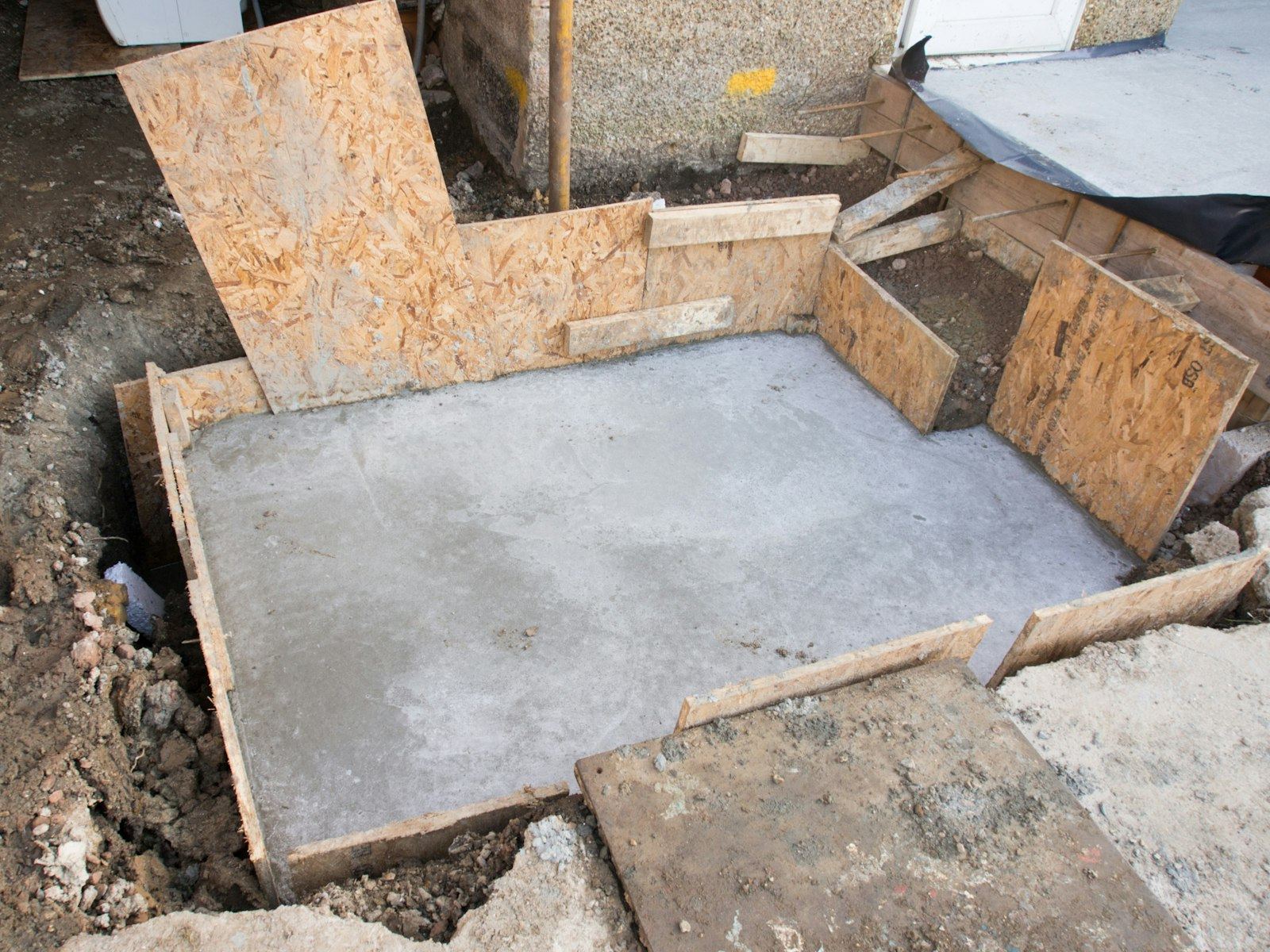
Depth depends on the ground beneath your home
Underpinning goes as deep as it needs to reach stable soil. There is no standard measurement because the ground varies across Cardiff. A shallow trench might be enough in one street, while another requires work several metres down.
The specialist firm carrying out the job determines the depth after examining the soil. They look for a layer that will not shrink when it dries or compress under the weight of the building. Until they find that firm stratum, the excavation continues.
If you have noticed cracks and want to know whether they relate to ground movement, a subsidence survey establishes what is happening below the surface. The findings dictate how far down any repair must go.
Clay soils demand deeper foundations
Much of Cardiff sits on clay. Clay swells when wet and shrinks when dry, so foundations built into it move with the seasons. When that movement damages a home, the repair must go below the zone where moisture changes affect the soil.
In practice, this means digging past the top layers of clay to reach material that stays put. Tree roots complicate things further because they draw moisture from deeper in the ground. A mature oak can dry clay several metres down, so the new foundation must pass that influence zone.
Understanding how clay behaves explains why some cracks open in summer and close in winter. If your walls show seasonal movement, reading about clay soil cracks helps clarify whether the problem is superficial or structural.
Made ground near the old docks and rivers
Homes built on filled land present a different problem. Around the docks and river valleys, builders often levelled sites with rubble, ash or loose soil. That fill compresses over decades, sometimes unevenly, causing walls to drop.
Underpinning through made ground means going past the fill entirely. The specialist firm digs until they hit natural, undisturbed earth or bedrock. This can add significant depth compared to a house sitting directly on solid clay or stone.
If your home is in an area reclaimed from industrial use, the ground history matters. Made ground behaves unpredictably, so the depth of any foundation repair depends on what lies beneath the fill rather than a set figure.
Mass concrete and how deep it reaches
Mass concrete underpinning is the most common method for houses in Cardiff. It involves excavating short sections beneath the existing wall, pouring concrete into the void, and repeating the process along the affected length.
The depth of each concrete pour matches whatever stable ground the specialist firm finds. In many cases, this means one to three metres below the current footing. But if the good soil is deeper, the excavation follows it down.
Because the work happens in small bays, the rest of the wall remains supported while each section cures. This method suits homes where the bearing layer is within practical digging distance. When it is not, a different approach becomes necessary.
Mini piling for very deep or restricted sites
Sometimes stable ground is too deep for mass concrete, or access is too tight for large excavations. Mini piled underpinning solves both problems. Steel-cased piles are driven or bored down to a load-bearing stratum, which might be five, ten or even fifteen metres below the surface.
The piles transfer the weight of the house past weak soil to something solid. This method is common where bedrock is deep, where trees have dried clay far down, or where working space beside the wall is limited.
A specialist firm chooses piling when conventional trenches would be impractical or unsafe. The depth is dictated entirely by where the pile achieves resistance, not by a predetermined number.
Resin injection works differently from digging
Resin injection stabilises the ground without traditional excavation. A specialist firm pumps expanding resin beneath the existing foundation. The resin fills voids, compacts loose soil and can lift a sunken wall back towards its original position.
This method does not go deep in the way concrete or piles do. It treats the soil immediately beneath the footing, usually within the first metre or two. It suits situations where the problem is localised softening rather than a complete lack of bearing capacity.
Resin injection is faster and less disruptive than digging trenches, but it only works where the underlying soil can be improved. If the ground is unsuitable at any shallow depth, the specialist firm will recommend a method that reaches further down.
Ask how deep your home needs
Send details of the cracks or movement you have noticed. A specialist firm will review them and advise on the right depth and method, with no obligation to proceed.
- No obligation to proceed
- Free initial assessment
- Local ground knowledge