Cardiff ground conditions
House built on old dock land: made ground in Cardiff
If your home sits near the old docks and you have noticed cracks, describe what you see. There is no charge to send an enquiry, and it does not commit you to any work.
House built on old dock land: made ground in Cardiff
What made ground means for your foundations
Cardiff grew fast around its docks in the nineteenth century. Builders needed flat land where there was only mudflat and water, so they filled the gaps with whatever was available. That fill included rubble, ash, timber offcuts and dredged silt from the river channels. It was compacted just enough to build on, then houses went up.
Made ground like this does not behave like natural soil. It settles unevenly over decades because the materials inside it compress at different rates. A house built on old dock land might stand perfectly level for fifty years before one corner starts to drop as a pocket of soft material finally gives way. The walls above follow that movement, and cracks open along mortar lines or through bricks.
The depth of the fill varies even within a single street. One property might sit on two metres of compacted waste while the next rests on five metres of loose silt. This variation makes foundation problems unpredictable. If you suspect the ground beneath your home is shifting, a subsidence survey can establish how much movement has occurred and whether it is still active.
Recognising movement in homes near the docks
Cracks caused by made ground often appear where walls meet door frames or window openings, since those are the weakest points in the masonry. They tend to be wider at the top than the bottom if one side of the house is sinking faster than the other. You might notice doors that stick in summer but swing freely in winter, or floors that slope visibly when you place a marble on them.
Not every crack means the foundations are failing. Plaster shrinks, and brickwork expands slightly with heat. But a crack that keeps growing after you fill it, or one that lets daylight through from outside, suggests the ground is still moving. Monitoring the width over several months tells you whether the movement is seasonal or continuous. A specialist monitoring firm fixes small gauges across the crack and records changes to fractions of a millimetre.
Homes in areas like Butetown, Tiger Bay and the streets running down toward Cardiff Bay were largely built on this reclaimed land. Properties in nearby Penarth also sit over variable coastal deposits that behave similarly. Understanding what lies beneath the floorboards is the first step before deciding on repairs.
How specialists repair foundations on soft fill
Standard shallow foundations struggle on made ground because the load spreads into material that cannot support it. When a specialist underpinning contractor works on a house near the old docks, they need to bypass the fill entirely or consolidate it so it stops compressing.
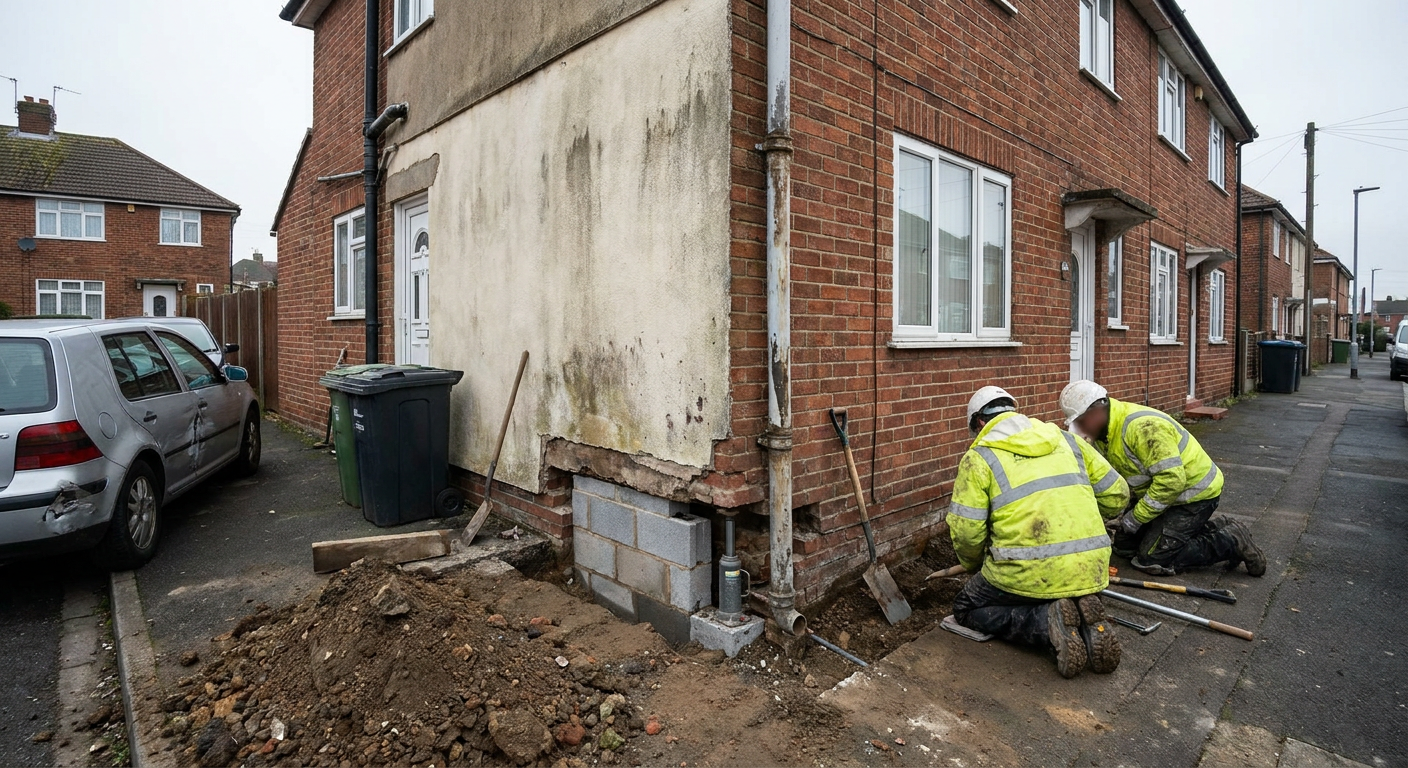
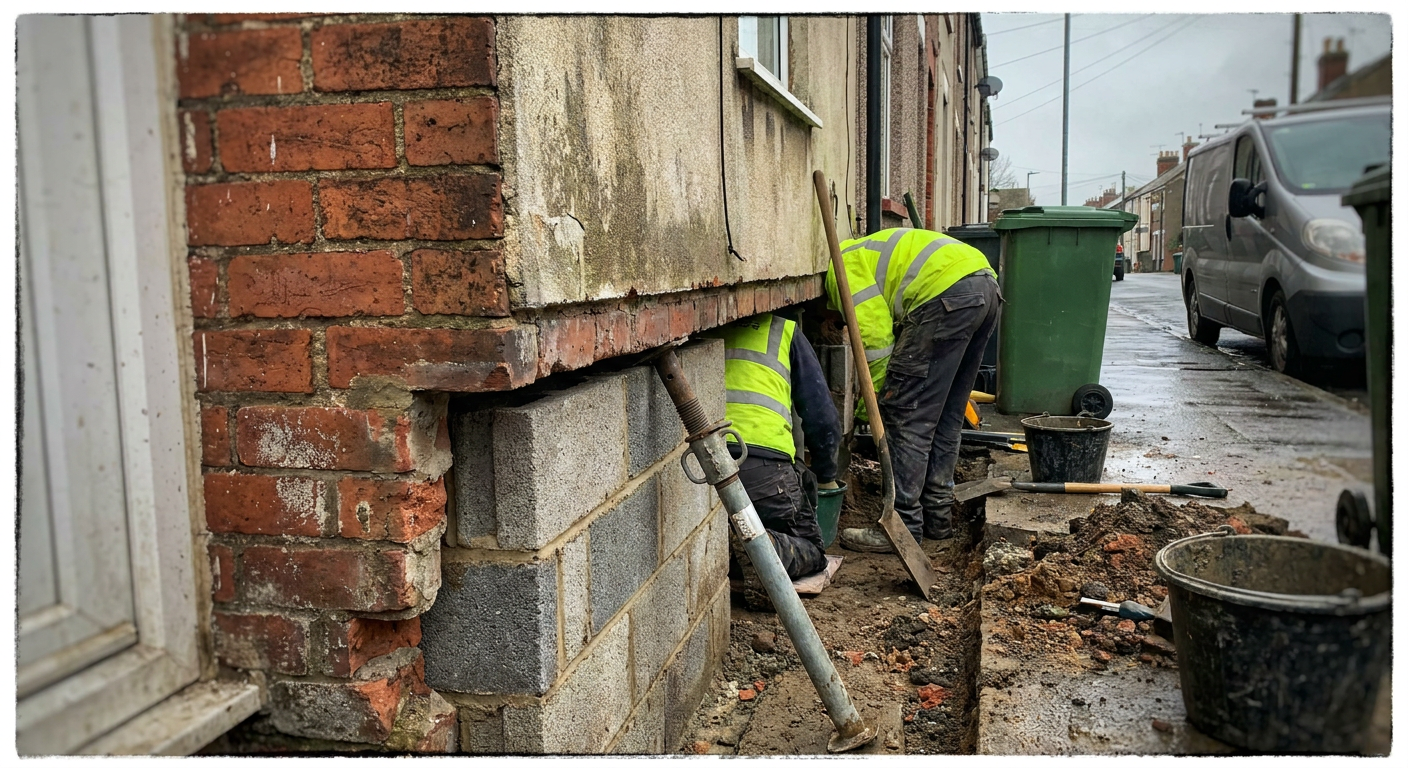
Mass concrete underpinning involves digging sections beneath the existing footing and pouring concrete to reach firmer strata below the fill. This works where stable ground is within a few metres. On deeper dock land, the good bearing layer might be too far down for mass concrete to be practical. In those cases, mini piled underpinning drives steel-cased piles through the soft fill until they grip solid rock or dense clay far below. The house load transfers onto these piles through a new concrete beam.
Resin injection offers another approach. A specialist pumps expanding resin into the voids within the made ground itself, compacting the loose material from the inside without excavating. This suits situations where access is tight or the fill is relatively shallow. The right method depends entirely on what the ground investigation reveals, which is why a thorough survey comes before any structural work begins.
Drains, trees and other things that make it worse
Made ground is already prone to settlement, but outside factors accelerate it. A leaking drain beneath the house washes fine particles out of the fill, creating underground voids that eventually collapse. Because the original fill was never uniform, water finds the softest paths and enlarges them quickly. Checking drainage pipes for fractures is a standard part of investigating subsidence on dock land.
Trees planted close to the house extract moisture from the surrounding soil. On natural clay this causes shrinkage, but on made ground the roots can penetrate deep into loose fill, disturbing material that was barely holding together. Large poplars or willows near old dock properties are particular risks because their root systems spread wide and search aggressively for water.
Cold weather affects cracks too. Frost penetrating porous made ground can heave the surface slightly, widening existing fractures during winter months. If you are tracking a crack, note whether it opens further between November and March. Recording these patterns helps the specialist firm determine whether the movement is driven by temperature, moisture loss or ongoing settlement of the fill itself.
Tell us what you have noticed in your home
Send a description of the cracks or movement you see. The details go to a specialist firm who handles foundation repairs in Cardiff, and asking costs nothing.
- No obligation to proceed
- Free to ask questions
- Local firms handle work